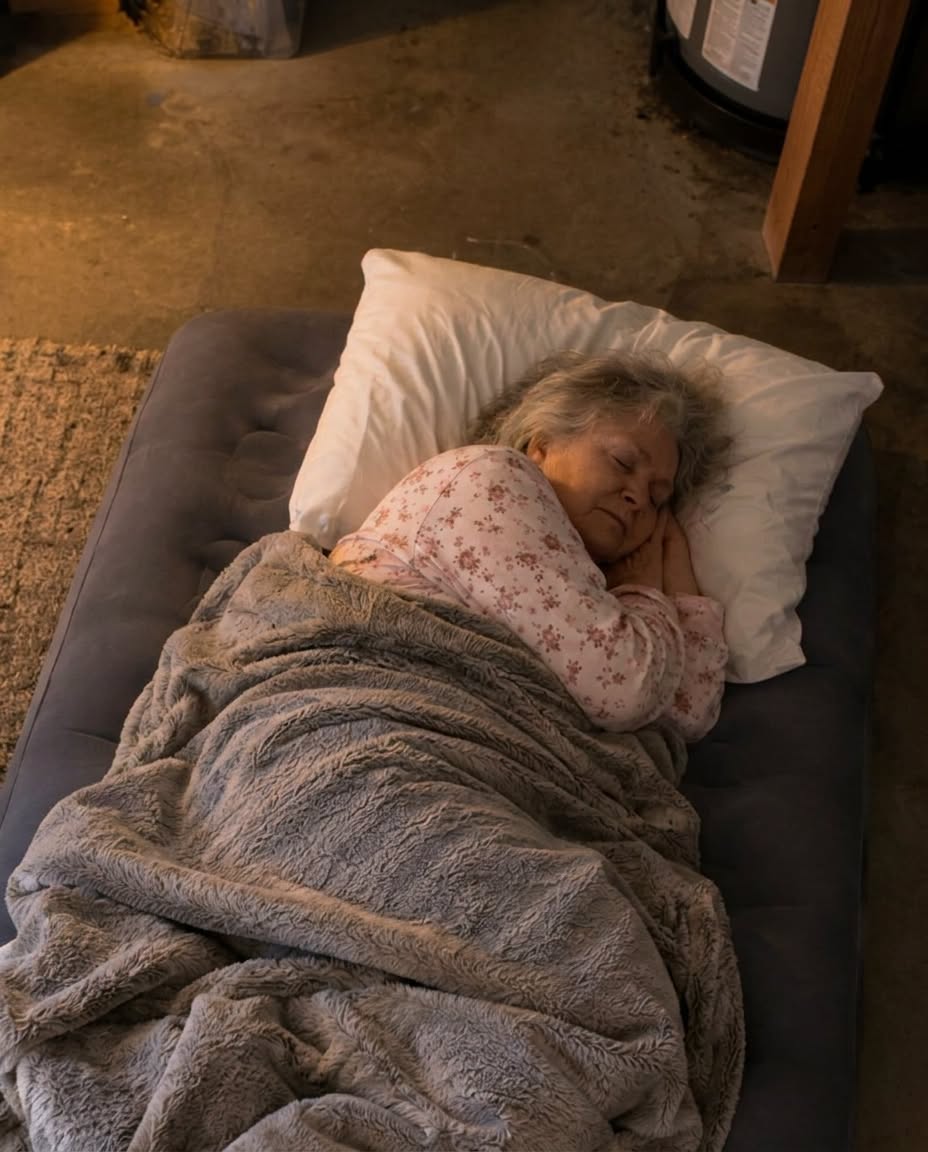
The first thing I saw when I came home early was my mother’s water cup sitting beside the basement stairs. Helen carried that cup everywhere during chemotherapy because the treatment left her mouth painfully dry, so seeing it abandoned on the floor stopped me before I had even set down my suitcase. Then I heard football blaring from the first-floor guest room—the room we had specifically given Mom because the bathroom was only a few steps away and stairs had become difficult for her. When I walked in, my husband Gabriel was watching the game with his brother, beer bottles and chips scattered across the comforter. “Where’s Mom?” I asked. He muted the television and told me she was downstairs. A few minutes later I found my seventy-year-old mother trying to push herself upright from an air mattress between the laundry area and the couch.
Gabriel insisted she had agreed to the arrangement because his brother wanted to use the larger television in the guest room. But my mother had been saying “I can manage” since her first infusion, even when she was exhausted enough to steady herself against walls rather than ask for help. Gabriel knew that. He knew she was immunocompromised, knew she struggled with stairs, and knew the guest room had been chosen precisely because it gave her easy bathroom access during treatment. When I told him to move her things back upstairs, his frustration hardened into something uglier. “I pay bills here. I maintain this place,” he snapped. Then came the sentence that changed the entire argument: “I’m the man of the house, Talia. At some point that has to mean I get to decide something.” My mother looked down at the floor, and I realized this was no longer about football or a bedroom. It was about what Gabriel believed authority inside a family was supposed to look like.
I moved Mom upstairs myself, then called Mrs. Fisher, the elderly neighbor Gabriel had spoken about since we were dating. She had practically helped raise him when his own mother worked late, and Gabriel often told the story of how she had once called him “the man of the house.” That evening she arrived carrying a pie, listened to what happened, and asked Gabriel whether he remembered why she had given him that title. He did not. She did. When he was fourteen, his exhausted mother had come home carrying groceries, and Gabriel had taken every heavy bag from her arms before she could ask. “I wasn’t telling you that you outranked everyone,” Mrs. Fisher said. “I called you that because you noticed your mother was tired.” Then she took us to her own house and showed him the guest room where an older aunt with bad knees had once slept while teenage Gabriel took the uncomfortable couch. “Did giving her the bed make you less important?” she asked. “Then why did Helen have to become less important because your brother wanted a television?”Relationship counseling
On the drive home Gabriel finally stopped defending himself. I told him the decision had seemed small because he measured it by what it cost him: keeping Mom upstairs meant losing access to a television, while moving her downstairs meant forcing a chemotherapy patient to climb stairs every time she needed food, water, or a bathroom. Later, when his brother texted asking whether they would use the same setup for the next game, Gabriel replied simply, “No. Helen needs the room.” He unplugged the television himself and went to apologize to Mom. He told her he had treated her needs like an inconvenience and acknowledged that her willingness to “manage” did not amount to informed permission to make things harder for her. From then on, we agreed on a clearer caregiving plan: the accessible room remained hers during treatment, medications and hydration stayed within reach, and household decisions affecting her health would be discussed rather than assumed. The lesson was not really about who owned the house. It was about whether the people inside it were being treated as partners, guests, or obstacles.
That night Mom asked for water, then immediately tried to take the request back with her familiar, “Never mind, I can get it.” Gabriel stood up, paused, and asked whether she would like him to bring it. She looked surprised before saying yes. The next morning he carried breakfast into her room, slightly burned toast balanced beside tea, and when Mom smiled and teased, “Man of the house,” Gabriel glanced down at the tray and gave a small, embarrassed smile. “Apparently,” he said. I watched him carry it inside and understood why the moment mattered more than any dramatic apology could have. Mrs. Fisher had not taught him that being “the man of the house” meant having the final word. She had taught him, years earlier, to notice when someone else was carrying too much. He had simply forgotten.