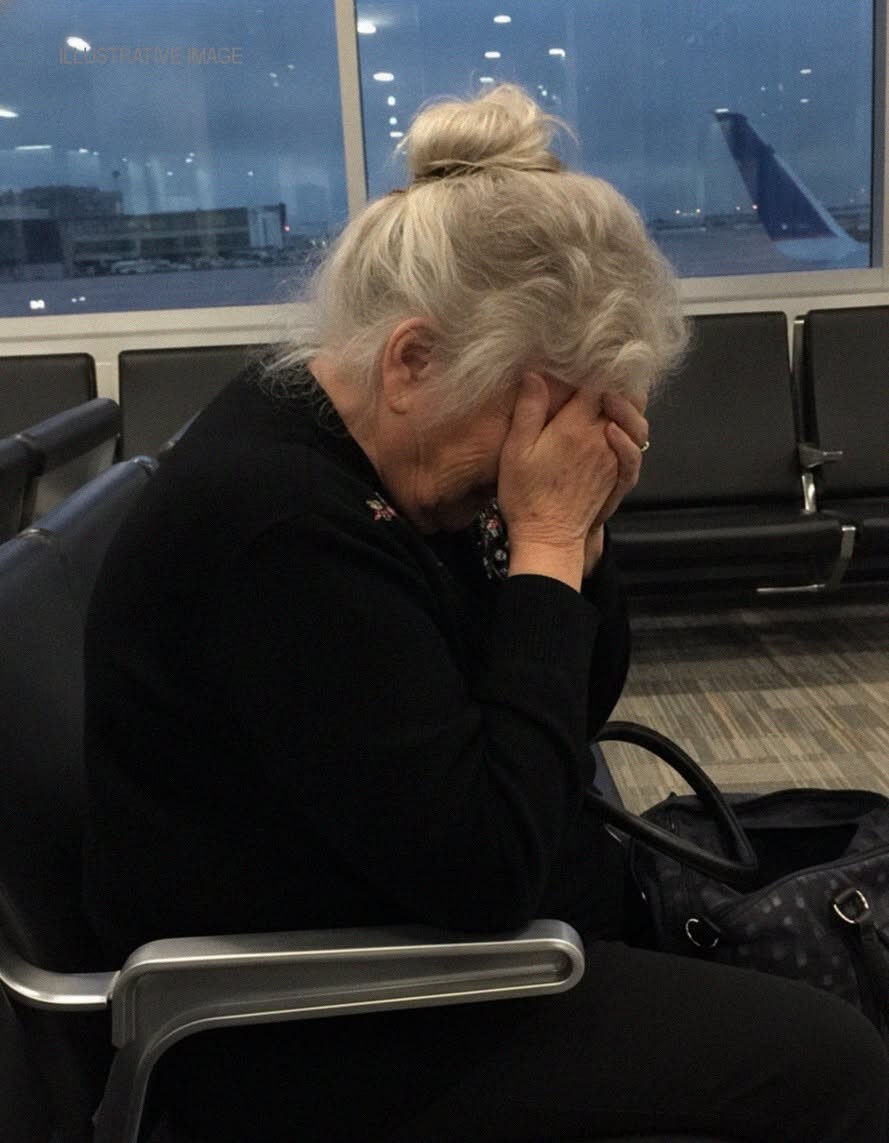
“Mom, just take a cab. We’re busy.”
Those were the first words my son said to me after I landed.
I had just buried my husband of forty years.
I had barely slept in three days.
And I was standing alone in an airport thousands of miles from home, still carrying the grief of watching the man I loved disappear beneath the ground where he was born.
I had called my son Jason because I thought that was what family was supposed to be for.
Instead, he told me to find my own way home.
“Dad is gone, Mom,” he said impatiently. “Stop making everyone responsible for your grief.”
Then he hung up.
I stood there staring at my phone.
Around me, families were hugging, laughing and collecting their luggage.
I had neither.
My suitcase had been lost during the transfer.
And my children couldn’t even spare an hour to pick me up.
So I called a taxi.
As the car drove through the rain, I couldn’t stop thinking about my husband, Henry.
He had always been different.
Quiet.
Generous.
And much more observant than I had realized.
For forty years, he had slipped small sealed envelopes into his coat pocket every morning.
Whenever I asked what they were, he simply smiled.
“Bills,” he would say.
I never questioned him.
Now I wished I had.
Because Henry had spent years seeing something I refused to see.
Our children were taking us for granted.
Jason called whenever he needed money.
Melissa called when she needed someone to babysit.
Birthdays became shorter.
Visits became less frequent.
And somehow, I kept telling Henry the same thing.
“They’re still our children.”
He never argued.
He simply nodded.
Now, sitting alone in the taxi, I remembered something else.
A week before Henry died, a woman named Claire Bennett from a local television station had contacted me.
She wanted to tell Henry’s story.
I had refused.
Henry had always been private, and I didn’t want strangers discussing his life.
But now, sitting in that taxi, I found Claire’s number again.
I didn’t call her immediately.
First, I had to go home.
When I finally arrived, I expected to see my children waiting for me.
Instead, I found them already inside my house.
And something about the scene made my stomach turn.
There were pieces of blue tape everywhere.
One said:
**MELISSA.**
Another said:
**JASON.**
They had labeled Henry’s rocking chair.
His toolbox.
Even parts of my jewelry cabinet.
They were already dividing things.
My husband had barely been buried.
And they were deciding who would get what.
Melissa looked at me.
“You finally made it? What took you so long?”
I didn’t answer.
I simply walked upstairs.
In our bedroom, Henry’s shirt was still lying on the pillow.
I picked it up and held it against my face.
Then I remembered something a young mechanic named Marcus had told me after the funeral.
“My mother is Anna Weber,” he had said.
“Your husband paid for her cancer treatment ten years ago.”
I had been stunned.
Henry had never told me.
Marcus said his mother was still alive because of him.
That was the moment I realized I hadn’t known everything about the man I’d spent forty years beside.
That evening, I finally called Claire.
“Is your offer still open?” I asked.
“Yes,” she said.
“I’ll tell you everything.”
But Claire said something that stopped me.
“Eleanor, your husband came to see me months ago.”
I froze.
“What?”
“He prepared for more than one possibility,” she explained. “He told me that if something happened to him, the story should only be told if you decided you were ready.”
I sat silently.
Henry had known.
He had known that our children might behave differently after he was gone.
And he had prepared something.
The next morning, I entered his study.
Inside the bottom drawer, I found a leather folder.
There were records.
Bank statements.
Letters.
And one entry that made my hands shake.
**$22,000 — Jason’s canceled debt.**
Three years earlier, Jason had apparently been in serious financial trouble.
Henry had paid the debt.
He had never told me.
And he had never told Jason to feel guilty about it.
I took the folder with me.
That evening, my family gathered around the television.
Jason sat comfortably in Henry’s recliner.
Melissa was already talking about selling the cabin.
They were discussing Henry’s possessions as though his funeral had been weeks ago.
Then the evening news began.
A photograph of me appeared on the screen.
Jason immediately sat upright.
“What the hell is this?”
Claire’s voice filled the room.
She began telling the story of a quiet local man who had spent decades helping people without asking for recognition.
Henry had paid medical expenses for six children with cancer.
He had helped veterans attend trade school.
He had paid the mortgage of a widowed neighbor.
He had created a scholarship.
And he had done almost all of it anonymously.
People began appearing on the screen, telling stories about the stranger who had changed their lives.
One woman explained that she had only discovered Henry’s identity after his death.
A young mechanic talked about how Henry had saved his mother’s life.
Jason stared at the television.
Then I looked at him.
“Denver,” I said.
He turned toward me.
“Three years ago.”
His face went pale.
“Twenty-two thousand dollars,” I continued.
Melissa looked at him.
“What is she talking about?”
Jason didn’t answer.
He knew.
Then Claire’s voice became quieter.
“There is one more part to Henry’s story.”
The screen changed.
It showed my house.
The rocking chair.
The jewelry cabinet.
The blue labels my children had placed on everything they wanted.
Jason jumped up.
“How could you do this to us?”
I looked at him.
“I didn’t.”
“You planned this!”
“No.”
I took a breath.
“I only wanted a ride from the airport.”
The room became silent.
Then I told them what Henry had arranged.
He had left his assets to a foundation created in his name.
I was the sole trustee.
His money wasn’t going to be divided between children who had immediately started labeling his belongings.
It would continue helping people.
The people Henry had quietly helped during his lifetime.
Jason stared at me.
“But we’re his children.”
I nodded.
“You were.”
Then I added the words I had been holding inside for days.
“And you were still his children when he paid your debt.”
Jason looked down.
“He never reminded you.”
“He never made you feel guilty.”
“He simply helped you because you were his son.”
My voice finally broke.
“And neither you nor Melissa even came to your father’s funeral.”
Nobody spoke.
For the first time, they couldn’t argue with me.
They had expected an inheritance.
They had expected me to continue protecting them from consequences.
Instead, they discovered that Henry had left something much more important behind.
A legacy.
Weeks later, I began working at the foundation.
Every day, I read scholarship applications and medical assistance requests.
It was difficult.
But for the first time since Henry died, I felt that I was doing something that would have made him proud.
Then my phone rang.
It was Sophie, my granddaughter.
She asked if she could visit me for the weekend.
I smiled.
“Of course.”
After everything that had happened, I finally understood something.
For forty years, I had spent my life protecting my children from the consequences of their choices.
Henry had spent his life protecting strangers from circumstances they never chose.
He had quietly helped people who would never have been able to repay him.
And now I knew which kind of kindness I wanted to continue.
I couldn’t bring Henry back.
But I could make sure his generosity didn’t disappear with him.
Sometimes losing someone teaches you things you were never willing to see while they were alive.
And sometimes the people you thought would be there for you are the first ones to walk away.
But that doesn’t mean you have nothing left.
Sometimes, it means you finally have the freedom to discover what your life can become.
Henry had spent his final years preparing for a future he knew he might not see.
He didn’t leave behind anger.
He left behind a purpose.
And that became the greatest inheritance of all.