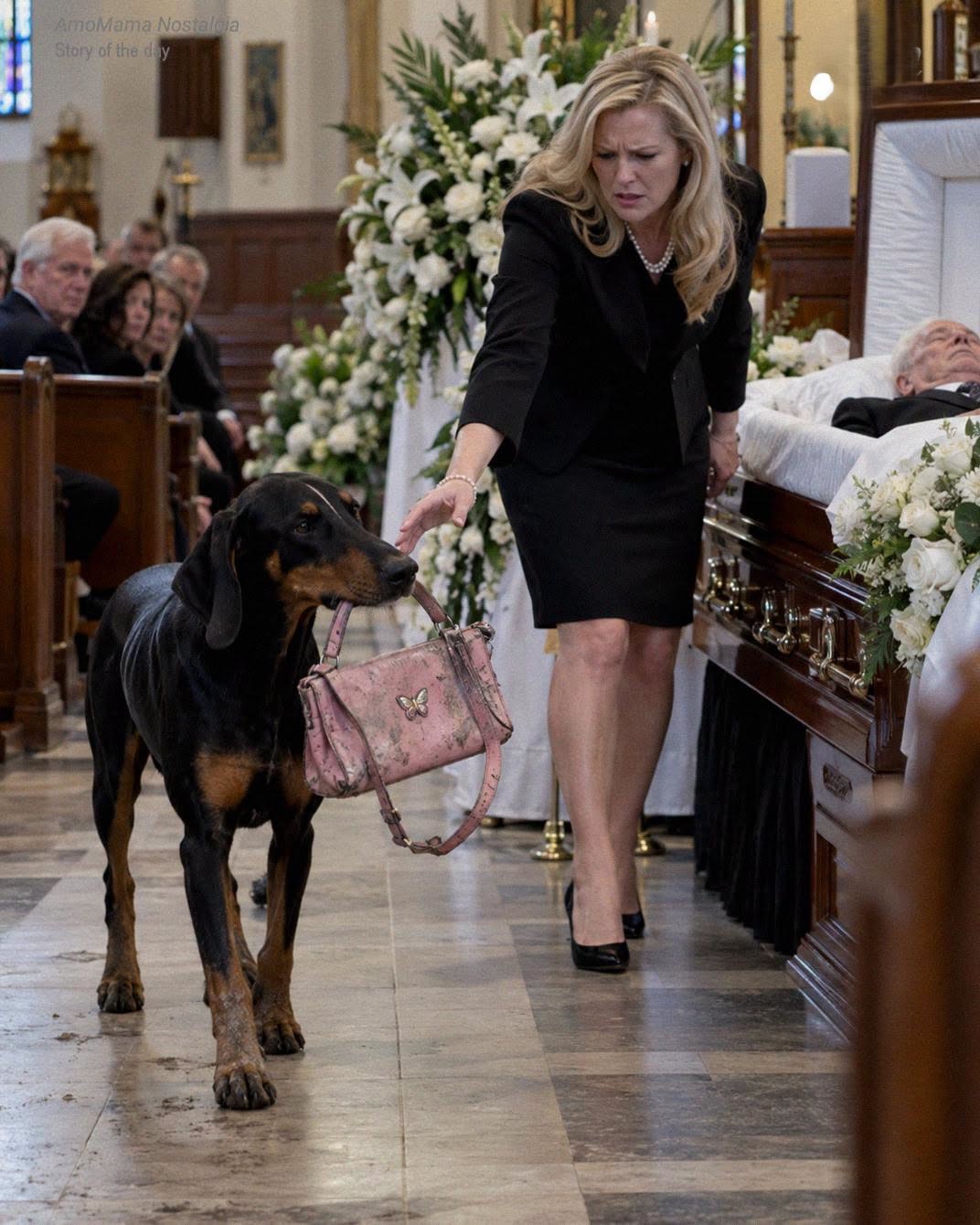
When my father passed away, the hardest part wasn’t losing him.
It was figuring out what to do with his dog.
His name was Duke, a large black-and-tan Doberman who had been beside Dad for nearly eight years.
To everyone else, Duke looked intimidating.
To Dad, he was family.
After the funeral, my sister Emily offered to take care of him.
“I’ll keep him until we figure everything out,” she said.
I was relieved.
But three days later, Emily called me.
“You need to take Duke.”
I was confused.
“What happened?”
“He can’t stay here.”
“Why?”
“He’s too big. He’s aggressive. And my kids are scared of him.”
I reminded her that Duke had never attacked anyone.
Dad had taken him everywhere.
The dog had even slept beside Dad’s bed when he was sick.
Emily didn’t care.
“I don’t want him in my house anymore.”
I asked if I could come pick him up.
She agreed.
When I arrived, Duke was sitting quietly near the front door.
But the moment he saw me, he stood up and started whining.
I could tell something was wrong.
Emily handed me his leash.
“He’s been acting strange since Dad died.”
I took Duke home.
For the next few days, I noticed something unusual.
He refused to sleep.
He would walk from room to room, stopping near the front door.
Sometimes he would stare at the hallway for several minutes.
Then one afternoon, I found him lying beside Dad’s old jacket.
He wouldn’t move.
That’s when I understood.
Duke wasn’t aggressive.
He was grieving.
A week later, Emily called again.
“I think you should bring him back.”
I couldn’t believe it.
“Why?”
“Because I found something in Dad’s house.”
She told me that while cleaning out the garage, she had discovered an old envelope with my father’s name on it.
Inside was a letter.
Dad had written it several months before he died.
The letter explained that Duke had saved his life once.
Dad had suffered a serious fall in the backyard.
He couldn’t get up.
Duke had barked continuously until a neighbor came to investigate.
The neighbor found Dad unconscious and called an ambulance.
Without Duke, Dad might not have survived that day.
Emily was silent as she told me.
Then she said something that surprised me.
“I didn’t know.”
Neither did I.
But there was more.
Inside the envelope was another document.
Dad had left specific instructions about Duke.
He had written that if anything happened to him, Duke should never be abandoned or placed in a shelter.
He wanted his children to make sure the dog stayed with someone who understood what Duke meant to him.
Emily started crying.
“I thought he was just a dangerous dog.”
“He’s not,” I said.
“He was Dad’s best friend.”
A few days later, Emily came to my house.
Duke walked toward her cautiously.
She knelt down.
For the first time, she put her hand on his head.
“I’m sorry,” she whispered.
Duke rested his head against her shoulder.
Emily began crying.
She told me she had been scared because she didn’t understand him.
She had only seen a large Doberman.
She hadn’t seen the dog who had stayed beside our father when everyone else had gone home.
Months passed.
Duke became calmer.
Emily eventually brought her children to visit.
At first, they stayed several feet away.
Then one of them reached out.
Duke didn’t move.
The little girl touched his head.
He simply closed his eyes.
Soon, the children were asking when they could see “Grandpa’s dog” again.
One evening, Emily looked at me and said,
“I almost sent him away.”
I nodded.
“But you didn’t.”
She smiled.
“I’m glad.”
That experience taught our family something important.
Sometimes we look at an animal and see its size, its breed, or its appearance.
But we don’t see the history behind those eyes.
Duke wasn’t just Dad’s Doberman.
He had been his companion, his protector, and his family.
And after Dad was gone, Duke was grieving too.
We had lost a father.
He had lost his person.
So instead of separating ourselves from the one thing that reminded us of Dad, we learned to take care of each other.
And every time Duke lies beside Dad’s old chair, we remember the same thing:
**Love doesn’t always speak.
Sometimes it simply stays.**