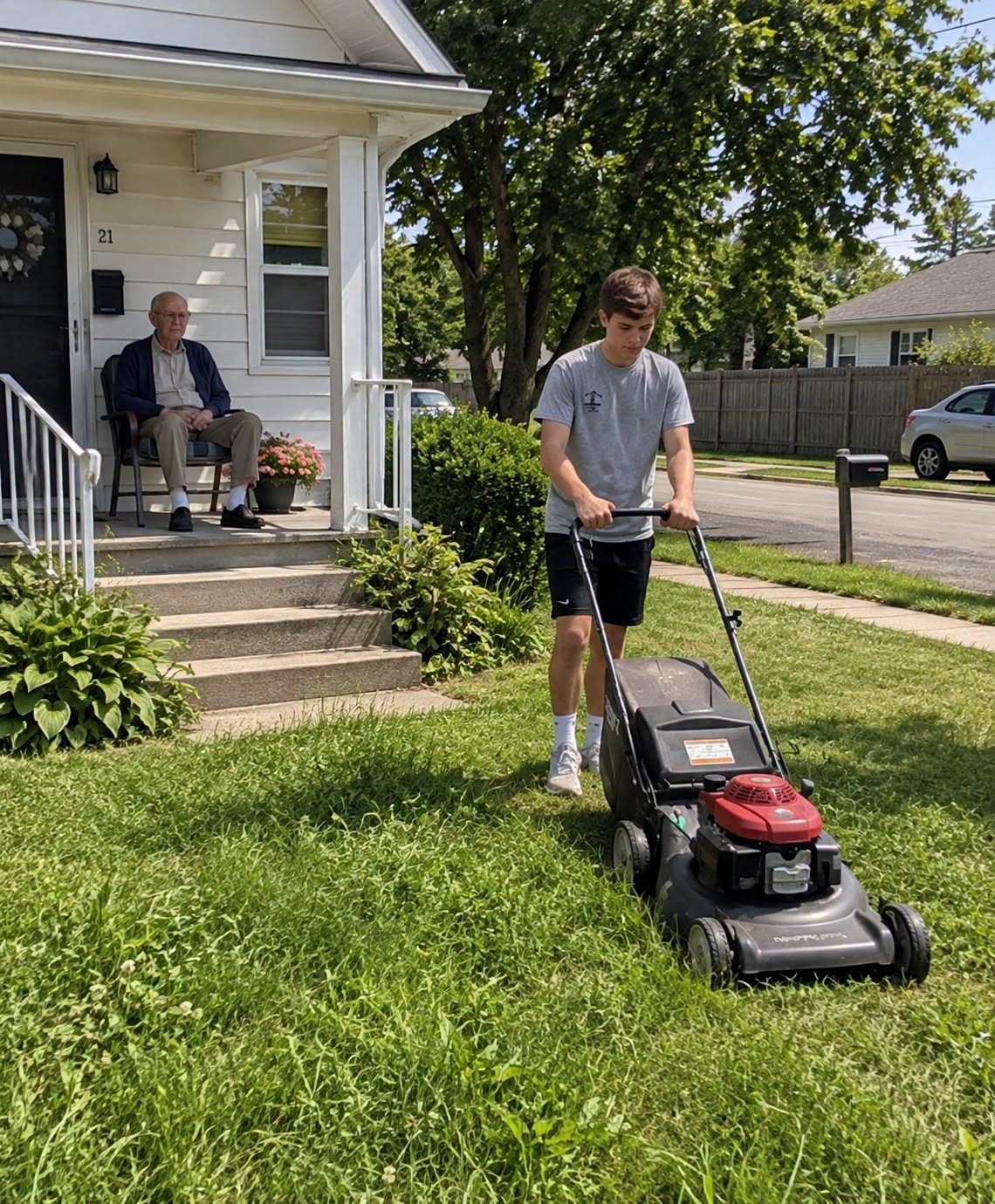
I thought I’d raised an ordinary boy who did the decent minimum: mow a lawn, earn a check, wave to the widower across the street. The will exposed a different architecture. In Mr. Vance’s precise ink, my son emerged as the one person who had crossed over, week after week, into an old man’s unfinished life. The money was only scaffolding; the real inheritance was a language for what Noah had done without naming it—spending his attention where the world had quietly stopped looking.
Years later, when he texted about an elderly stranger and a failing garden, I recognized the shape of that letter in his impulse. No fanfare, no savior narrative—just another street to cross. The trust would empty, careers would shift, houses would change hands. But a lonely engineer’s last audit of a boy’s character had landed where it mattered. He hadn’t just funded a future; he’d confirmed a pattern, and my son had decided to keep living up to it.