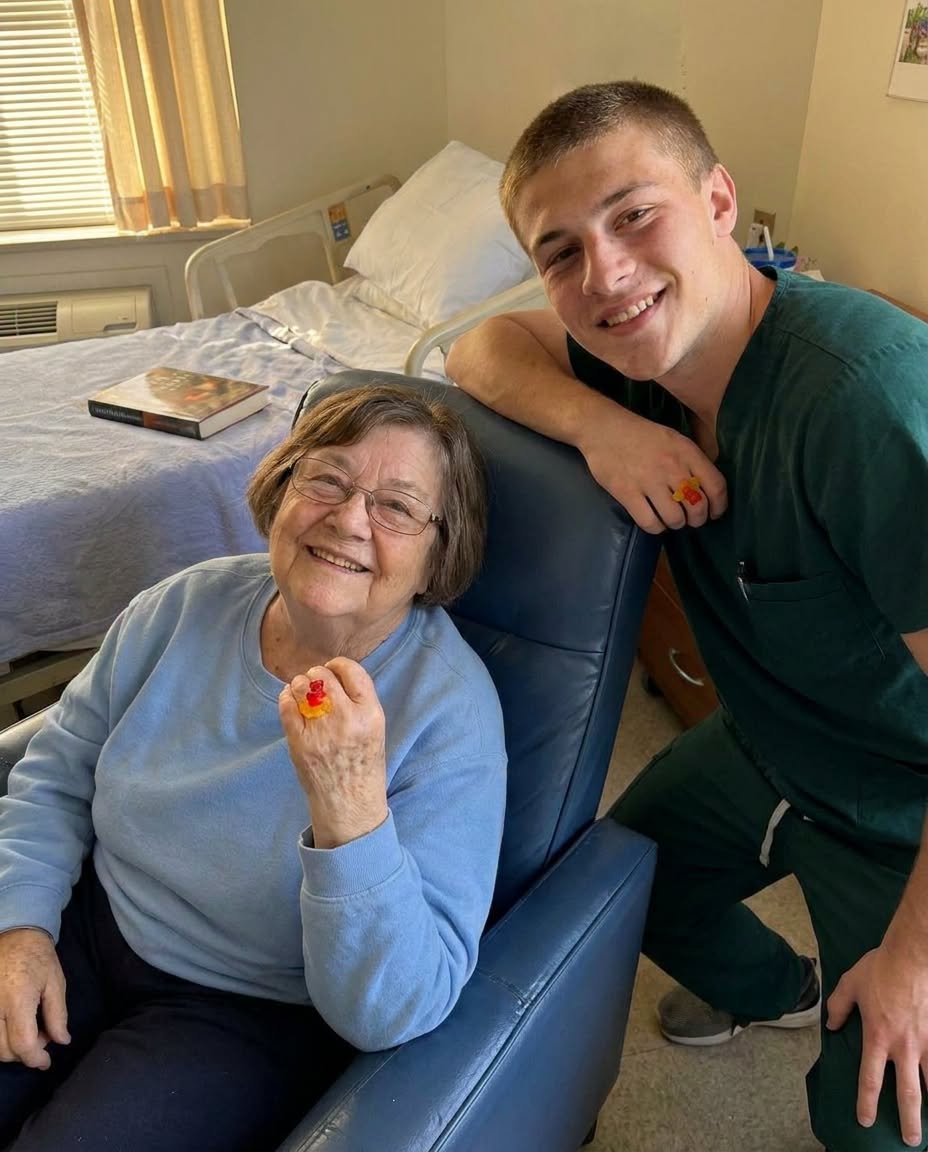
“Eleanor arranged something for you before she died,” the lawyer said, sliding a folder across his desk. I was twenty-two, still wearing the black shirt I’d bought for her funeral, and the last thing I wanted was another conversation about her money. Her children had already accused me of taking advantage of a dying woman, and I’d spent weeks wondering whether anyone would ever believe that I had loved her without expecting anything in return. Outside the office window, rain streaked the glass, blurring the traffic below, while a small brass clock ticked steadily between us. The lawyer, Daniel, explained that Eleanor had transferred a collection of books into my name before her death and that the prepaid storage period was about to expire. When he showed me the appraisal, I stared at the figure—nearly $38,000—and immediately pushed the paperwork away. Eleanor had looked me straight in the eye when I proposed with a candy ring and told me I wouldn’t receive a penny from her, so why had she arranged a gift valuable enough to make every accusation against me sound believable? Daniel opened his desk drawer, removed an envelope addressed in her familiar handwriting, and told me there was something about my family Eleanor had never found the courage to explain.
My name is James, and I was working as a student care assistant when I met Eleanor, a sixty-nine-year-old resident at the care facility where I completed part of my training. She’d been living there for fourteen months, dealing with an illness that had gradually taken away much of her independence but none of her sharp wit. The first time I entered her room, she was sitting beside the window with a book resting on her knees, irritated because she’d misplaced her reading glasses. I offered to read to her, and she warned me not to use the exaggeratedly cheerful voice people sometimes adopted around older residents. I laughed, sat down, and began reading in my normal voice. Within ten minutes she was arguing with the author, and by the end of the chapter she was arguing with me. We developed a routine during my permitted breaks: I’d read a few pages, she’d interrupt with an opinion, and we’d disagree about whether a character was foolish, lonely, selfish, or simply misunderstood. I began looking forward to those conversations more than almost anything else in my week. My mother loved me, but she’d spent years working hard and worrying about how to keep our family afloat, and I had learned to keep many of my own concerns to myself. Eleanor, by contrast, asked about my exams, remembered difficult assignments, and wanted to know how things had turned out. If I mentioned a problem in passing, she’d sometimes ask about it three weeks later. I wasn’t accustomed to someone paying that kind of attention to the ordinary details of my life. Her own family was rarely present. During the time I knew her, I saw her children visit only twice, and both visits seemed to involve documents they wanted her to review. After one of those meetings, she sat quietly for a long time before telling me the worst part of aging was the way people began discussing your life as though you weren’t in the room. I understood what she meant. Even when Eleanor was tired or physically uncomfortable, she had strong opinions about books, music, people, and what should happen in her own care. She didn’t want to be treated as a passive figure whose only remaining importance lay in decisions other people hoped to make on her behalf. Our friendship grew through those conversations. We talked about growing up, about disappointment, and about what happens when years pass without someone saying the thing they’ve been meaning to say. Sometimes Eleanor spoke about loneliness with such precision that I wondered how someone surrounded by caregivers could feel so completely alone. Other times she made me laugh until the nurse at the desk reminded me that people were trying to rest. By March, my feelings had become difficult to explain even to myself. I told Eleanor I was in love with her. She laughed at first, assuming I was teasing, then grew serious when she realized I meant it. She reminded me that she was dying and that I was only twenty-two. I told her I understood both facts. In April, with eleven dollars left in my bank account, I bought a gummy candy shaped like a ring and asked her to marry me. It was a ridiculous proposal, and I knew it. She laughed so hard she had to catch her breath, then slipped the candy ring onto her finger. But when she looked up again, her expression had changed. She asked whether I was hoping to inherit something from her. I was hurt that she’d even considered it, though I understood why a relationship between a young care assistant and an older patient would raise questions. Eleanor insisted that I wouldn’t receive any money from her estate. I told her that was fine because money had nothing to do with how I felt. She studied my face and quietly said she knew. Once I disclosed my feelings to the facility, I was reassigned so that I no longer had responsibility for her care. The staff and supervisors needed to maintain professional boundaries and ensure that her medical and personal decisions remained free from inappropriate influence. I accepted the reassignment, continued my studies, and visited Eleanor only outside my working hours, as an ordinary visitor. We never married, and she never promised me a romantic future. She cared about me, but her affection wasn’t the same as the love I’d offered. At the time, I told myself the distinction didn’t matter because she was happy when I came and I was happy when I sat beside her. She died in September. Her children were angry when they learned about my proposal and accused me of trying to manipulate their mother into leaving me part of her estate. I didn’t blame them for asking questions, but the certainty of their accusations hurt. They hadn’t been present for our conversations, the books we’d shared, or the afternoons when Eleanor asked me to sit a little longer because the room seemed too quiet after I left. Then Daniel called. He explained that she’d made an inter vivos gift—a transfer completed during her lifetime—of her personal book collection. The nine boxes had been placed in storage under my name, with documents signed by Eleanor herself. He cautioned that a substantial gift to someone who had worked in her care environment could still be challenged, even if the donor appeared to have acted voluntarily. There could be questions about capacity, undue influence, or the circumstances surrounding the transfer. I had never asked for the books, and the prospect of another dispute with her family made me want to refuse them outright. Daniel seemed prepared for that response. He handed me Eleanor’s letter, and the first revelation was so unexpected that I had to read the line twice: she had known my grandmother Margaret long before she ever met me.Bank account protection
Eleanor wrote that she and Margaret had grown up together, shared books, told each other their secrets, and once promised that nothing would separate them. They’d been as close as sisters, she said, until something happened when they were young married women. She recognized my surname when I first introduced myself because it was the name Margaret had taken after her marriage. At first, she assumed the connection was coincidental, but details I mentioned about my family led her to search old newspaper notices. Eventually she discovered that I was Margaret’s grandson. By then, we’d already developed our friendship, and she was afraid that revealing their history would change the way I saw her. Daniel took me to the storage room, where nine carefully labeled boxes waited on shelves. Inside one was a photograph of two teenage girls beneath a tree, holding a book between them. One was unmistakably Eleanor. The other had my grandmother’s eyes. On the back, someone had written, “Margaret and Ellie. Summer, 1972. Sisters forever.” I stared at their young faces, wondering how two people who had once looked so happy together could disappear from each other’s lives without anyone in my family mentioning the other. I asked Daniel why Eleanor had kept the connection secret, but he said the letter would explain more than he could. Before I left, he reminded me that the prepaid storage period ended that Friday and that I’d need to arrange collection or an extension. I went home with the letter and read the remaining pages slowly. Eleanor admitted there was something worse than hiding her connection to my grandmother. When I was nine, my father lost his job, and our family suffered a financial crisis severe enough that we eventually lost our house. I remembered my mother crying quietly in the kitchen and Margaret arriving with groceries, pretending she’d simply purchased more food than she could use. Eleanor wrote that an old acquaintance had told her about our difficulties. She’d once promised Margaret that if either of their families needed help, the other would come. Yet when the moment arrived, Eleanor did nothing. She was ashamed of the way their friendship had ended and convinced Margaret would reject any offer. Instead of risking an uncomfortable conversation, she remained silent. In the letter, she called that choice cowardice. I set the pages down and felt angry in a way I hadn’t expected. I wasn’t upset because she’d failed to give us money; she had no obligation to solve another family’s problems. I was upset because she’d known we were struggling, knew the promise she’d made to my grandmother, and allowed fear to keep her away. Suddenly I questioned whether Eleanor’s kindness to me had been driven by affection or by guilt. Had she remembered my exams and worries because I mattered to her, or because I offered a way to make amends for something she’d never done? I wanted to believe our relationship had been genuine, but the letter made everything feel more complicated. I called Margaret that evening and asked whether she’d ever known a woman named Eleanor. She was quiet long enough that I thought the call had dropped. When I told her Eleanor had died the previous month, my grandmother whispered, “Oh, Ellie,” in a voice I had never heard before. I visited her the next morning and brought the photograph. Margaret took one look at it and began to cry. She told me they’d been inseparable as girls, sometimes reading through the night and passing books back and forth through Margaret’s bedroom window. Their friendship ended after Margaret confided that she was considering leaving her husband during a difficult period in their marriage. Eleanor believed she was helping and told him about the conversation, hoping he’d offer reassurance and persuade Margaret to stay. Instead, Margaret’s husband became furious, accusing her of discussing their private life with others, and the resulting arguments made an already strained marriage worse. Margaret ultimately stayed, and they worked through their problems, but she couldn’t forgive Eleanor for revealing something she’d shared in confidence. When Eleanor apologized, Margaret told her never to contact her again. Eleanor obeyed. Decades passed, and their lives moved in separate directions. Margaret admitted she’d stopped feeling angry more than twenty years earlier, but by then so much time had elapsed that reaching out seemed almost impossible. She feared Eleanor wouldn’t want to hear from her, while Eleanor had apparently spent those same years convinced Margaret still hated her. When I showed my grandmother the part of the letter describing our family’s financial crisis, she was stunned. She said she’d have welcomed help from anyone during that period, including Eleanor, but neither woman had dared reopen the relationship. I sat beside Margaret, thinking about the lost years, the unopened conversations, and the two teenage girls in the photograph. Then I understood that the books weren’t simply an expensive collection Eleanor wanted to pass along. They were a way of putting something she had guarded for decades back into the hands of the family she’d been afraid to face.