“You really think anyone will show up tomorrow?” Earl asked, dropping his keys onto my kitchen table. His words stung more than I wanted to admit. For twelve years, he had managed our 11,000-acre Nebraska ranch, helped raise our daughters, and organized every spring branding. Now I had discovered that approximately $190,000 in grazing and hunting lease payments had been diverted into a secret bank account. My husband, Kyle, was undergoing chemotherapy, and we had already taken out a second mortgage to cover expenses our insurance wouldn’t pay. I had just fired the man we once considered family. Earl walked toward the door, then turned with a bitter smile. “Those neighbors come because of me, Rachel. Without me, you’re just a city girl trying to run a ranch.”
Our branding was scheduled for the following morning, with more than 300 calves waiting. I sat awake until four, staring at a list of telephone numbers, wondering how my two daughters and I could possibly manage. Sixteen-year-old Kenzie came downstairs wearing her boots, followed by fourteen-year-old Brynn carrying a rope. Both insisted they would help. Then Kyle, exhausted from treatment, slowly joined us with his little green tally book. He couldn’t ride, but he promised to count every calf. Shortly after five, headlights appeared beyond the pasture. One pickup became three, then six, then nine. As the trucks turned into our driveway, I hurried outside, completely unprepared for what our oldest neighbor was about to tell me.
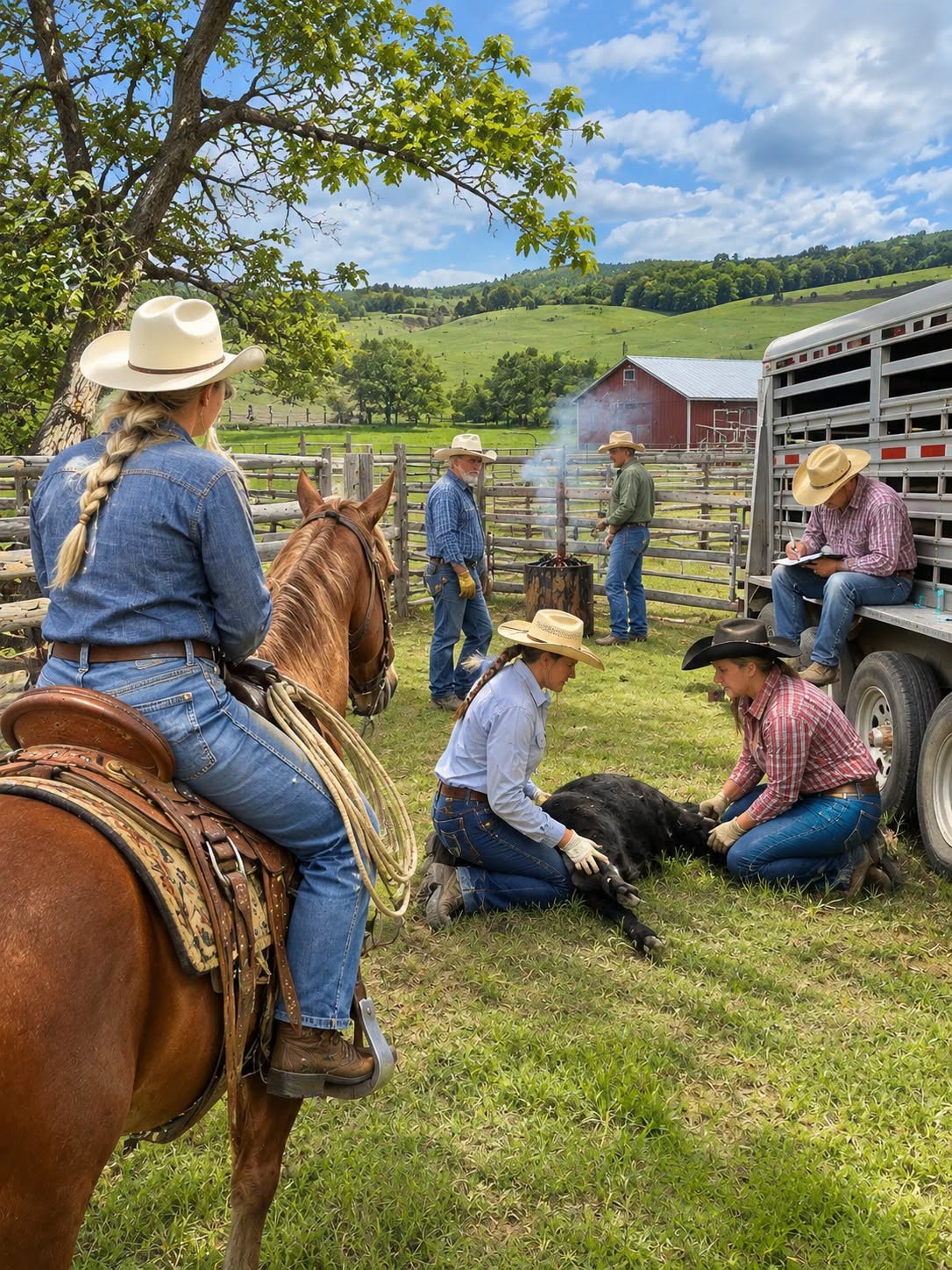
Walt Hagen stepped down from his truck and explained that Earl’s wife, Norma, had telephoned everyone the previous night. After learning about the missing money and the county attorney’s investigation, she begged the neighbors not to abandon our family. Every one of them agreed to come. Walt reminded me that ranching families had helped one another for generations, regardless of who held the foreman’s title. By sunrise, the corrals were bustling with horses, ropes, and familiar faces. Kyle sat beside the fence recording each calf while our daughters worked alongside experienced ranchers. Later, he opened the tally book and showed me a newly written title: “Foreman: Rachel Andersen.” For the first time, I understood that my place on that ranch had never depended on Earl’s approval.
By afternoon, we had finished branding 304 calves. Earl’s pickup had appeared briefly along the distant road, but nobody stopped working. Months later, he pleaded guilty to felony theft by deception and was ordered to repay the money. Norma continued visiting our daughters, while Kyle eventually completed treatment and entered remission. The following spring, I personally invited the neighbors back. Every one agreed. This time, I wrote every helper’s name inside our green tally book, including Norma’s. I had spent years believing that running a ranch meant proving I could handle everything myself. But those nine pickups arriving before dawn taught me something I would never forget: a family’s greatest investment isn’t always its land or livestock. Sometimes, it’s the people who stand beside them when everything seems ready to fall apart.