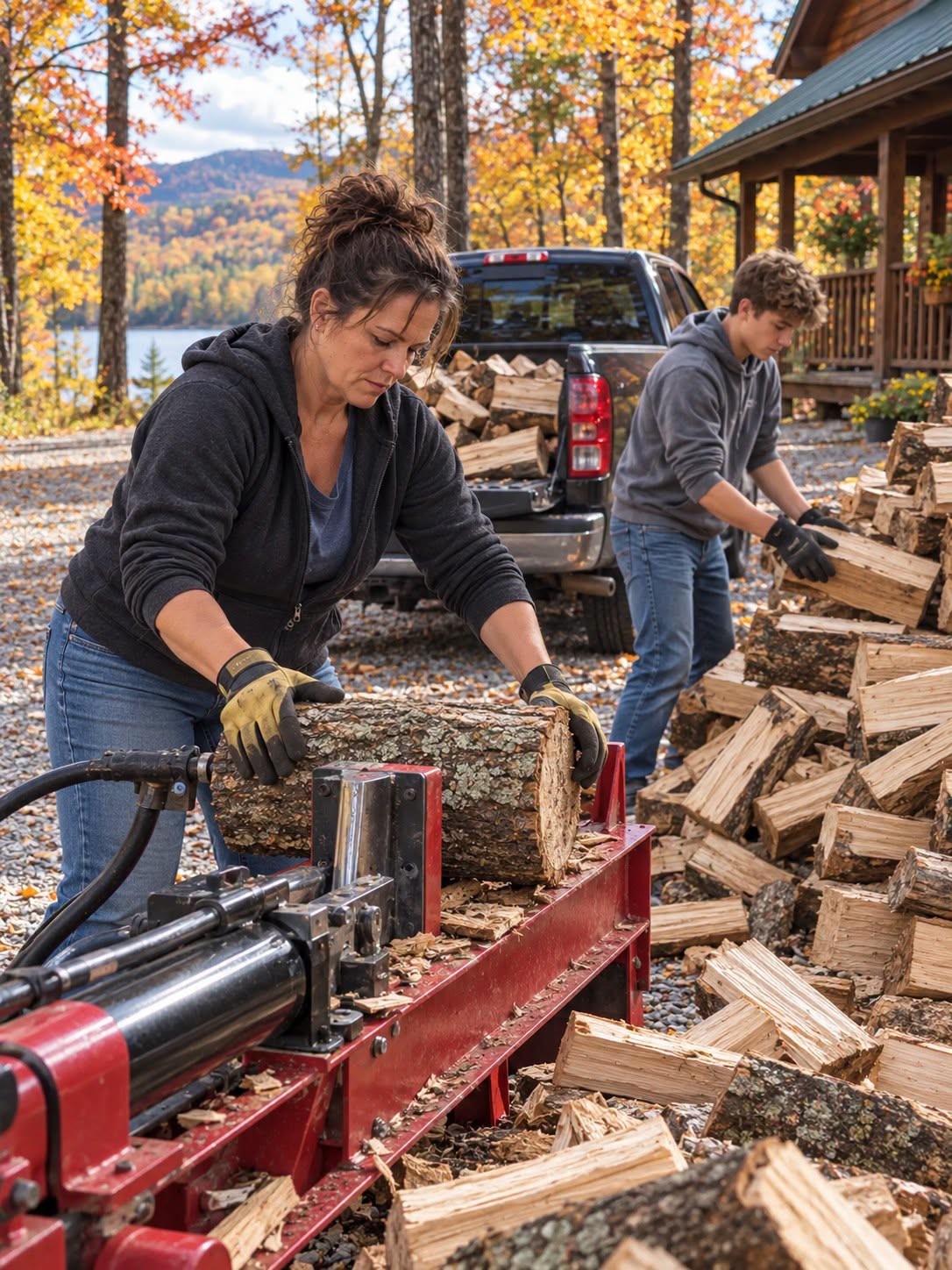
“Forty dollars for the afternoon,” my brother-in-law, Dale, announced, resting his hand on a red log splitter that had belonged to my late husband, Jim. I stood in his Wisconsin shed, stunned that he was asking me to pay to use a machine Jim had purchased six years earlier for $1,400. Jim had died in April, and Dale had taken the splitter from our yard during the week of the funeral, claiming he wanted to keep it safe. Now, with October temperatures dropping and winter approaching, I needed it to prepare enough firewood to heat our home. My 16-year-old son, Cole, waited in the truck, watching through the windshield as I faced a decision I never expected to make.
I could have argued that the splitter belonged to our family, but I knew an argument would waste precious daylight. Instead, I handed Dale two $20 bills and calmly requested a receipt. He wrote that he had received $40 from me for one afternoon’s rental, signed his name, and handed me the paper. I tucked it into my shirt pocket and took the machine home. While Cole and I worked through the afternoon, he discovered his father’s handwritten maintenance records on the hydraulic tank, including a note marking the first cord of wood he had split at age 11. Later, I noticed Jim’s old list of three widows along our road, the women he had supplied with free firewood every autumn. We worked until dusk, then delivered the wood they needed. But I had no idea that the small receipt I carried would soon bring Dale to a painful confession.
The following Monday, I pinned the receipt beside a note offering free split oak to widows and people who needed help before winter. By Wednesday, neighbors were offering their own equipment, and word had spread throughout the community. When Dale visited the local feed store, people read the receipt and quietly reconsidered what had happened. That Saturday, 86-year-old Mrs. Hartmann asked me to drive her to Dale’s home. There, she confronted him gently but firmly, asking why he had charged his late brother’s widow to use her own equipment. Dale finally admitted that Jim had borrowed $600 from him in February to repair a truck axle, promising to repay him when work resumed. Jim died before he could settle the debt, and Dale had been too ashamed to ask me for the money directly. Rather than explain the situation, he had taken the splitter and tried to recover the amount through rental fees.
I returned home, collected $600 from the money Jim had earned selling firewood, and paid Dale what his brother had owed. I also took back the original $40, which Dale had kept untouched in his pocket. With the debt settled and the misunderstanding finally addressed, Dale began helping Cole and me split the remaining wood. Together, we prepared our winter supply and delivered five additional cords to neighbors who needed assistance. A year later, the splitter was back where it belonged, and Dale arrived one autumn morning with his chainsaw and a pie from Mrs. Hartmann. As Cole handed his uncle a pair of work gloves, I added a fourth line to Jim’s old list: “Dale brings the saw.” It was a small gesture, but it marked the beginning of a better chapter for our family.