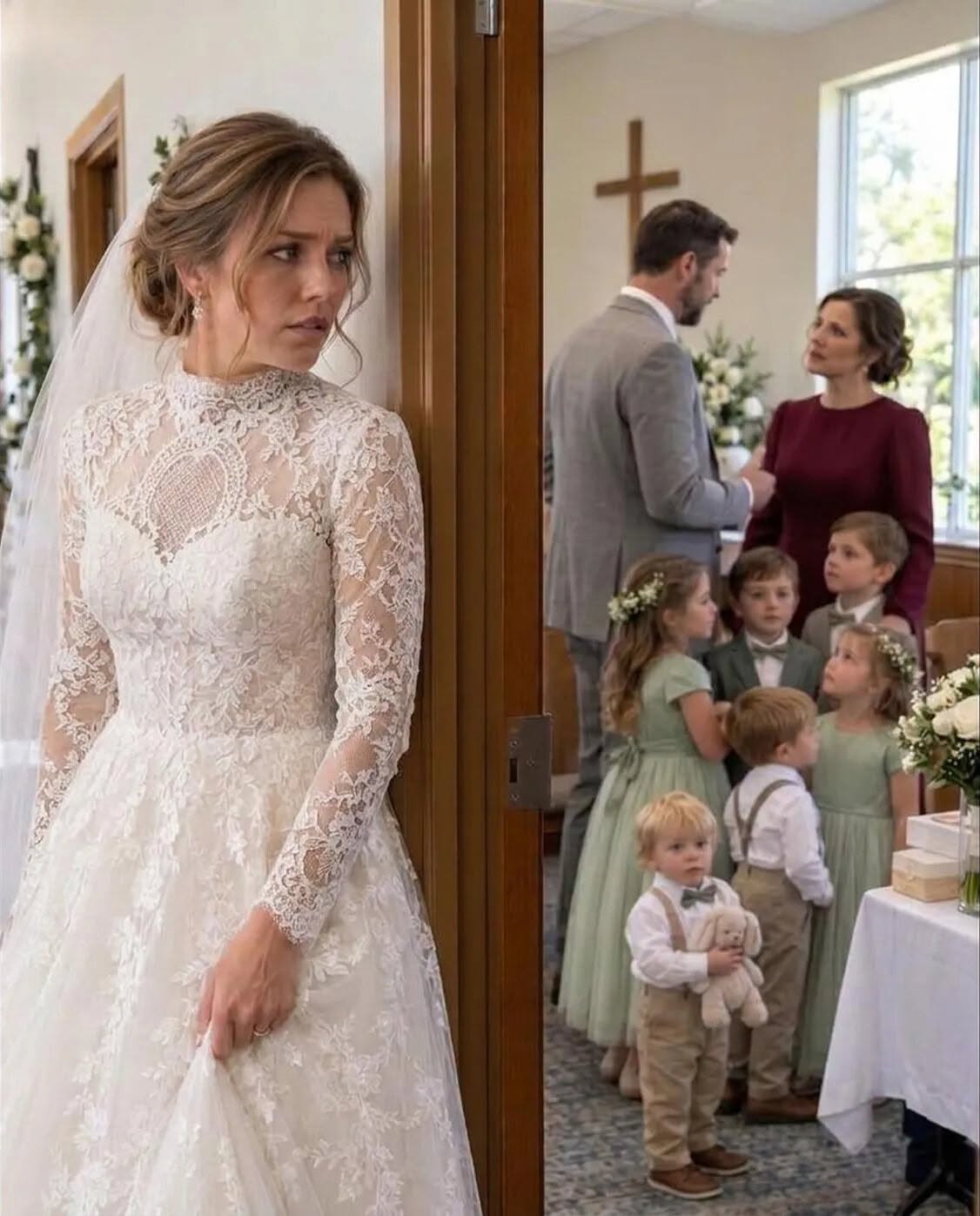
Ten minutes before the ceremony, I heard my fiancé, Seth, tell his sister, Heather, that she no longer needed daycare because I would care for her three children starting Monday. I stood frozen outside the fellowship room, clutching my wedding dress and struggling to believe what I’d heard. Heather’s children were all under six, and while I adored them, I had never agreed to become their full-time caregiver. I was 34, had worked nearly seven years at a dental practice near Columbus, Ohio, and had just received an offer to become office manager, complete with a higher salary and greater responsibility. Yet Seth had apparently decided that marriage meant I would abandon my career and spend five days a week looking after his sister’s children. When I confronted them, Heather admitted she believed I had already agreed to stay home until the following summer. Worse, she had canceled all three daycare places, and other families had already taken the openings. As seventy wedding guests waited in the chapel, I realized the man I was about to marry had made a life-changing decision without even asking me.
Seth insisted he had expected us to work out the details after the wedding, but his explanation only made matters worse. He claimed I loved the children and would eventually accept the arrangement, even though I had never discussed leaving my job. When I showed Heather the email offering me a promotion, she realized her brother had misled her, too. Their conversation revealed that Seth had promised her nearly a year of free childcare without my permission. Then Heather disclosed another disturbing detail: she had lent Seth $6,400 to repair his truck, and he had promised to repay her by arranging for me to watch the children. Messages on her phone confirmed the agreement. He had effectively traded my time and professional future to settle his personal debt. As I considered the wedding expenses, my career, and the future we had planned, Seth continued insisting we could resolve everything later. But when he admitted he expected me to change my mind once we were married, I finally understood what he had been counting on.
I called off the ceremony, leaving Seth stunned as our guests learned the wedding would not take place. The financial consequences were immediate: deposits had been paid, reception arrangements needed to be canceled, and some vendors would not offer refunds. My mother helped me review the expenses while my friend Paige stayed by my side. Heather and I compared messages and discovered that Seth had repeatedly misrepresented what each of us had said, creating misunderstandings that kept us from speaking honestly. I made it clear that I would not surrender my career to resolve his debt, and I refused to accept responsibility for childcare arrangements I had never approved. Although I had no reason to pursue a legal dispute over the canceled wedding, I understood that any shared financial commitments would need careful handling. If necessary, an attorney could help clarify responsibility for outstanding expenses or a disputed repayment agreement. Meanwhile, I returned to work Monday morning and accepted the office manager promotion I had earned through years of dedication.
The following days were painful, but they also brought a measure of clarity. Heather began contacting childcare providers, coordinating with her children’s father, and making arrangements that did not depend on my unpaid labor. She apologized for accepting Seth’s promise without speaking to me directly, acknowledging that her desperation for affordable daycare had clouded her judgment. I still cared about her children, but I understood that loving someone did not mean surrendering control over my own future. At home, I packed away the wedding items and placed the unused ring box on a shelf, knowing that practical matters—including dividing expenses and returning belongings—would take time to resolve. My new position brought fresh responsibilities, training opportunities, and a better salary, giving me something positive to focus on while I recovered emotionally. I had imagined marriage as a partnership built on trust and shared decisions. Instead, I discovered the truth just minutes before saying “I do.” Walking away hurt, but accepting a future designed without my consent would have cost me far more.