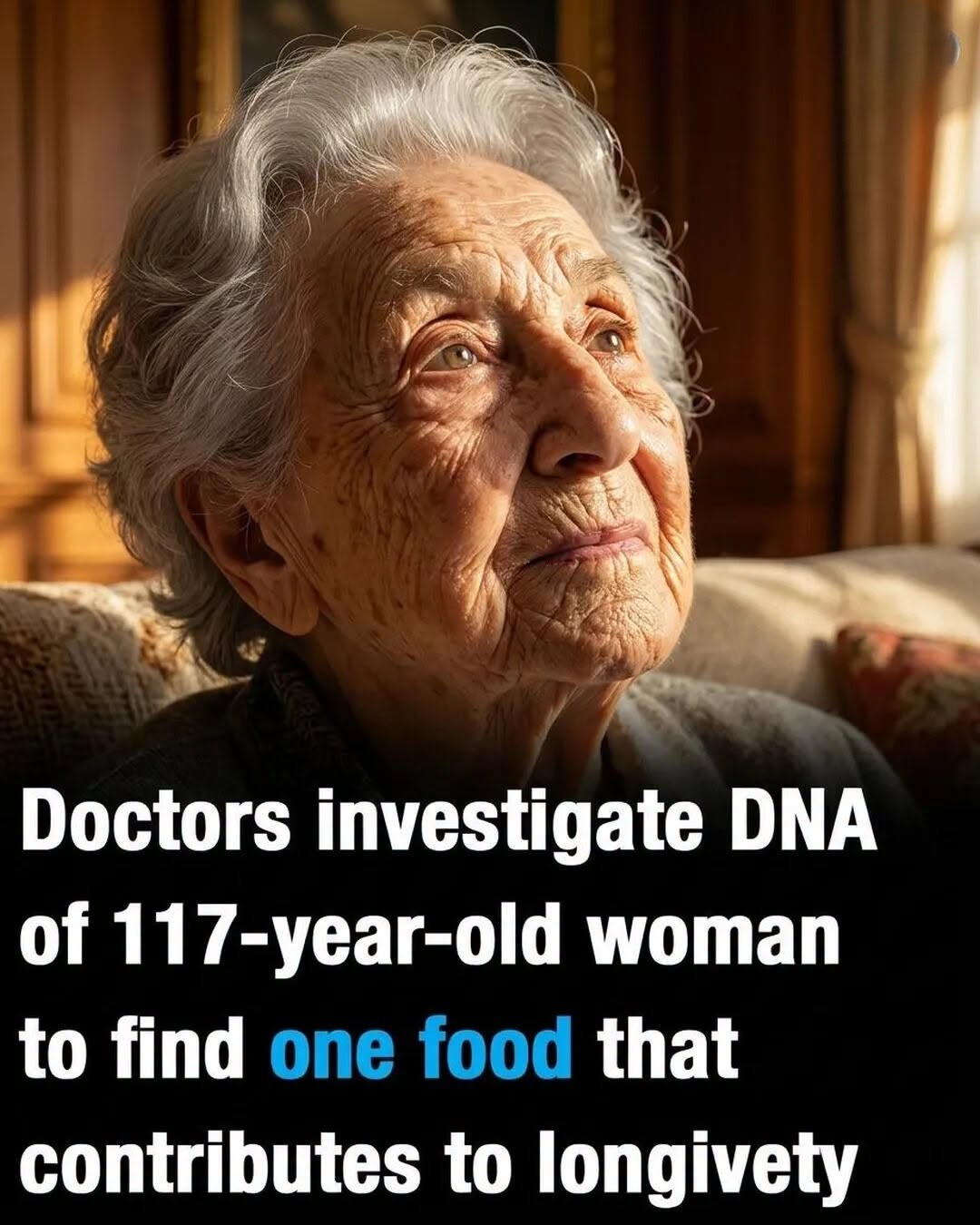
At 117 years old, Maria Branyas Morera had lived through two world wars, witnessed the presidencies of 21 American leaders, and watched the world transform beyond recognition. Born in San Francisco on March 4, 1907, she moved with her family to Catalonia, Spain, in 1915, after which tragedy struck when her father died of pulmonary tuberculosis during their journey. Despite the difficult beginning, Maria went on to build a life that stretched across more than a century. She became the world’s oldest verified living person in January 2023 and died on August 19, 2024, at the remarkable age of 117 years and 168 days. Yet what made her story especially fascinating was not simply how long she lived, but how well her body appeared to function at such an advanced age. Before her death, Maria made a request that would give scientists an unusual opportunity to investigate the biology behind her extraordinary longevity.
Researchers from the University of Barcelona and the Josep Carreras Leukaemia Research Institute examined Maria’s genetic makeup, cells, and other biological markers to understand why her aging process appeared so unusual. Led by scientists including Dr. Manel Esteller, the team discovered that several aspects of her biology resembled those of someone 10 to 15 years younger. Her blood work showed exceptionally low levels of LDL, often called bad cholesterol, and triglycerides, alongside high levels of beneficial HDL cholesterol. Scientists also examined her telomeres, the protective structures at the ends of chromosomes, which generally shorten as cells divide. Her case challenged assumptions about the relationship between extreme age and declining health. However, researchers knew that one remarkable individual could not provide a universal formula for longevity. As they examined Maria’s daily routines and dietary choices, another detail stood out: a familiar food she enjoyed regularly might offer an additional clue.
Maria had a particular fondness for yogurt, especially products from Spain’s La Fageda brand, known for its probiotic dairy products. She also reportedly began many mornings with a smoothie containing eight different cereals. Scientists are interested in how gut bacteria, inflammation, genetics, and nutrition may interact, although Maria’s story does not prove that yogurt caused her exceptional lifespan. Her healthy routines included regular physical activity, avoiding smoking and alcohol, and maintaining close relationships with family and friends. Her genetic advantages may also have played an important role, suggesting that longevity involves a combination of inherited traits and lifestyle choices. Understanding these connections could eventually inform medical research, preventive healthcare, and future investments in treatments that support healthier aging. Still, no food, supplement, or medical insurance policy can guarantee a person will live beyond 100, and anyone considering significant dietary changes should consult a qualified healthcare professional.
Beyond the laboratory findings, Maria left behind advice shaped by her extraordinary experience. She survived COVID-19 in 2020, when she was already 113, and later spoke about the need to treat older people with greater dignity and compassion. She raised three children and became a grandmother to 11 grandchildren and a great-grandmother to 13 great-grandchildren. In messages shared with help from her daughter, she credited a peaceful life, emotional stability, positive thinking, contact with nature, and strong family connections as important parts of her routine. Her story offers scientists valuable questions to explore, but it also highlights something no DNA test can fully measure: the importance of feeling connected and supported throughout life. Maria’s yogurt habit may have attracted attention, yet her legacy is much broader than one food. Her remarkable journey continues to encourage research into how people might not only live longer, but remain healthier and more independent as they age.