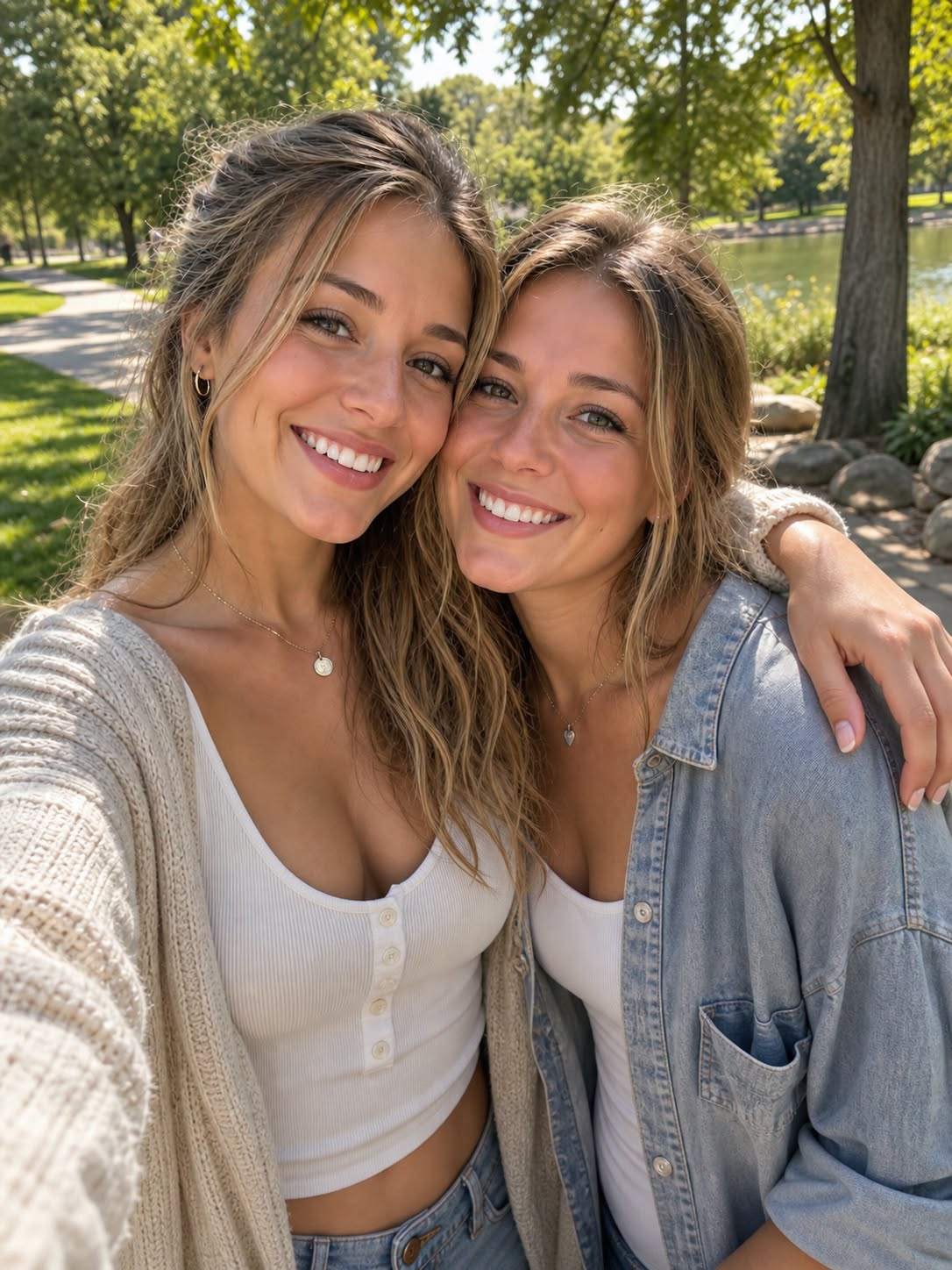
Ten years earlier, I’d buried an empty casket and learned to live as half of something broken. I built a life out of one toothbrush, one set of keys, one blue mug that always had a “spare.” Grief hardened into routine, into a quiet, single-person existence that felt like acceptance—until Clara’s voice came back through a receptionist’s phone and turned my certainty into rubble.
What followed wasn’t a miracle so much as a negotiation with the dead. Clara had survived the crash, lost her memory, then found something intoxicating in being nobody’s twin. When her past finally returned, she chose herself over our grief and let us mourn a living woman so she could exist unmeasured, unpaired. I can understand wanting to be whole; I will never understand why my devastation had to be the cost.
Now, we meet for lunches that are awkward and tender in turns. I buy one pastry for me, a different one for her, in separate bags. We are not rebuilding the girls we were; they died on that highway. Instead, we are learning how to be two entire people who share a face and a history, but not a single life.