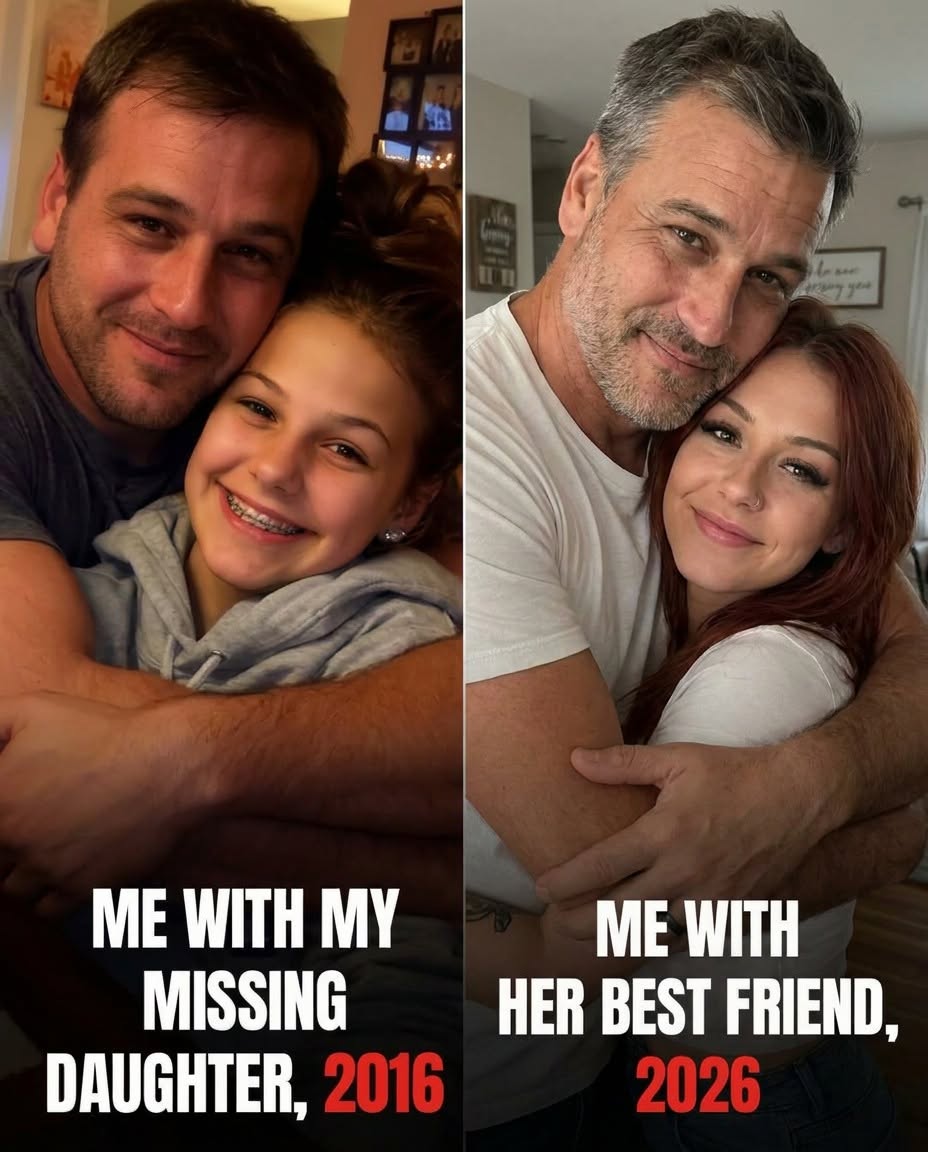
Nora stood in my kitchen with rain dripping from her coat, her face so pale it made the room feel colder. I had Emily’s old pink scarf in my hands, the same scarf I touched every year on the anniversary, the one I kept folded in the drawer because letting go felt like a second loss. Ten years had passed since my daughter vanished, and the town had spent most of them whispering that Nora knew more than she said. Now my adopted daughter was trembling beside the back door, looking at me like the next words might break us both. “Dad,” she said, barely above a whisper, “everything you know about that night is a lie.” My chair scraped the floor as I stood. Then she looked toward the porch and said, “Before I open that door, I need you to know I tried.”
Ten years earlier, after my wife Abigail died, Emily and I had learned to survive as a team of two. I burned toast, forgot school picture day, and packed the kind of lunches that made my twelve-year-old daughter roll her eyes, but we were getting through it. Nora lived three houses down with her grandmother, whose dementia was worsening faster than anyone wanted to admit, and Emily noticed first when her best friend was eating dry cereal for dinner because the old woman thought it was morning. Soon Nora was at our table for spaghetti, folding napkins, refusing the last cookie, and trying hard not to be a burden. Abigail’s parents, Carla and Grant, did not like how close the girls had become, and they pushed for Emily to spend more weekends with them. They spoke about my daughter like she was their second chance, while Nora, quiet and watchful, became the child everyone else found easy to overlook.
The night Emily disappeared began with an argument over a school dance. She wanted freedom, I wanted safety, and grief made both of us crueler than we meant to be. I told her maybe her grandparents knew better than I did, and she walked out into the rain with Nora following behind to bring her home. Only Nora came back, soaked, shaking, and unable to explain what had happened. Police searched, neighbors carried flashlights through the streets, and my brother Ronald told me to stay away from “that girl,” as if blame needed a face and Nora’s was convenient. When Nora’s grandmother later went into care, I became her guardian and eventually adopted her, even as people painted “LIAR” on my mailbox and accused me of replacing Emily. I never stopped searching for one daughter, but I refused to abandon the other — and then, ten years later, Emily sent Nora a message asking whether I had truly stopped looking.