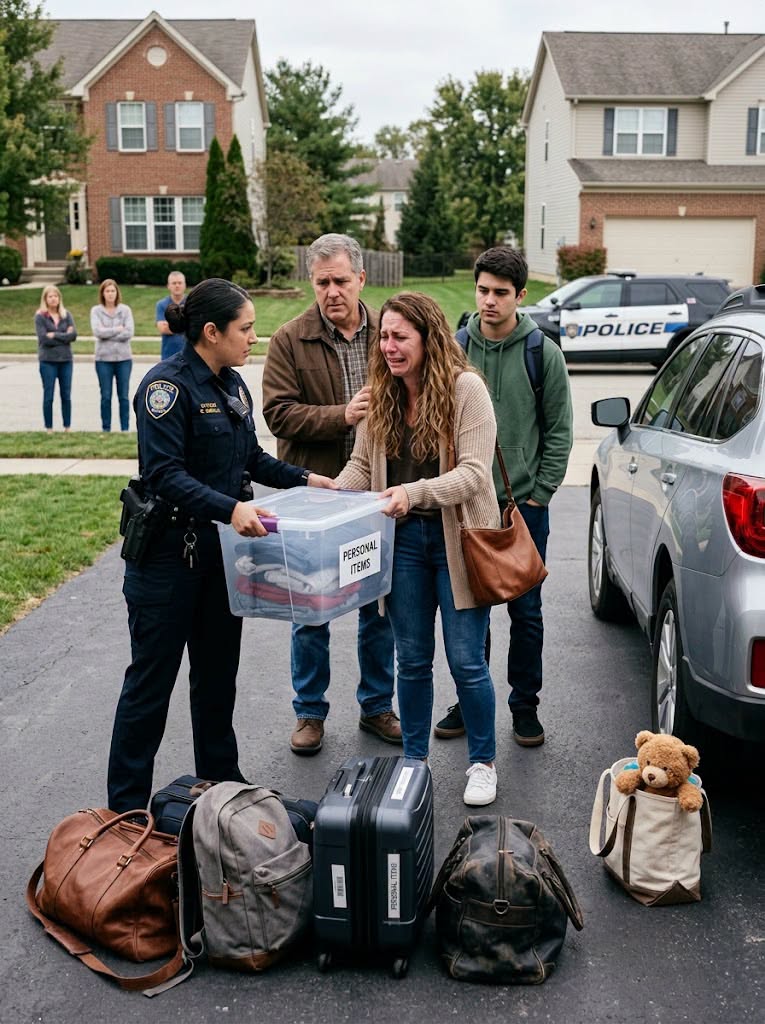
I never imagined that a police officer would be the person to expose the biggest lie in my marriage.
I bought my four-bedroom house on Pinewood Terrace in 2011, years before I met my husband, Mitchell. I paid for it with savings from my career as a logistics planner, and every mortgage payment, insurance policy, and legal document carried only my name.
When Mitchell and I married in 2014, we agreed to share our lives. Unfortunately, one thing we never discussed openly was how much his family misunderstood our financial situation.
His mother, Vivian, constantly praised her son for providing such a wonderful lifestyle for me. She made little comments about how lucky I was to have a husband who could afford such a beautiful home.
I never corrected her.
Mitchell never corrected her either.
For years, I assumed his silence was simply an attempt to avoid unnecessary family arguments. I was wrong.
Everything changed on a Thursday afternoon when Mitchell sent me a message.
“My mother is moving in today.”
I stared at the screen, certain I had misunderstood.
When I called him, he explained that Vivian’s rent had increased and she needed somewhere stable to live. I reminded him that we had never discussed this and suggested she stay with his sister, Mallory, who had a spare bedroom.
“She needs her space for work,” he replied.
Then he ended the call.
Less than an hour later, Vivian and Mallory arrived in my driveway with an SUV packed with suitcases, storage containers, and a peace lily.
I met them at the front door.
“Where is Mitchell?” Vivian demanded.
“He told me you could move in,” she continued. “So please move aside.”
I remained calm.
“You cannot move into my house without my permission.”
Her expression changed immediately.
“Your husband gave me permission!”
“And he had no right to make that decision without me.”
Mallory began recording everything on her phone. Vivian, furious that I refused to let her bring her belongings inside, called emergency services and reported that she was being illegally locked out.
Thirty minutes later, a police cruiser pulled into the driveway.
Officer Callahan stepped out and asked everyone to explain what had happened.
He turned toward Mitchell, who had just arrived.
“Are you the legal owner of this property?”
Mitchell hesitated.
“Well, it’s complicated…”
That hesitation told me everything.
I stepped forward and explained that I had purchased the home in 2011, before our relationship began. The deed, mortgage, and insurance documents were all in my name.
The officer reviewed the situation and calmly explained that Mitchell could not promise someone a place in a property he did not legally own.
Vivian stood frozen.
For nearly a decade, she had believed her son was the sole provider and homeowner. Now, in front of her daughter and a police officer, she discovered the truth.
After Officer Callahan left, I invited everyone inside so we could speak privately.
I confronted Mitchell about his silence.
“Why did you let your mother believe this house belonged to you?”
He looked down.
“I didn’t want to embarrass her. I thought it would be easier.”
“Easier for whom?” I asked. “Because you just tried to make a decision about my home without even asking me.”
Vivian finally turned toward her son, realizing that his deception had allowed her to disrespect me for years.
Then she apologized.
She admitted that her comments about my financial independence had been unfair and that she should have respected the work I had done to build my life.
Mallory apologized for recording me and escalating the confrontation.
Despite everything, I offered Vivian a temporary place in the guest bedroom while she searched for an apartment or considered a senior living community.
The next morning, she placed her peace lily on the windowsill and thanked me.
“Your son should have been proud of what you accomplished,” she said. “He never needed to hide it.”
Mitchell promised that future family decisions would be made together.
I accepted his apology, but I also made one thing clear: marriage did not mean surrendering my voice, my independence, or my right to decide what happened inside my own home.
That evening, as I looked around the house I had worked so hard to purchase, I realized something important.
The police visit had not destroyed my family.
It had exposed the truth we had avoided for nine years—and given us a chance to build something better.