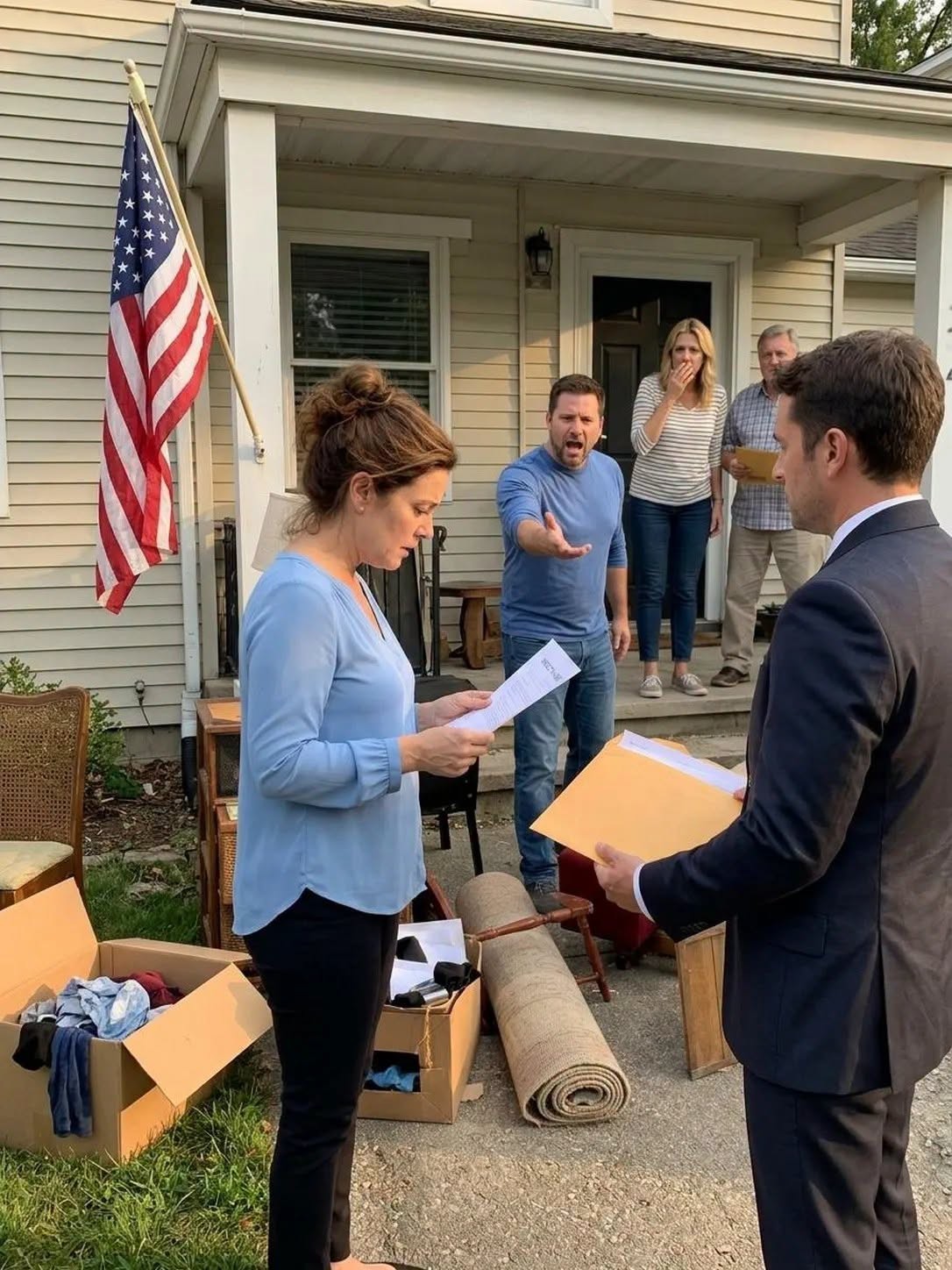
James Miller opened his front door and watched the color drain from his wife’s face. Megan stood on the porch dressed in black, having just told the neighbors that her husband had passed away and left behind a possible $36 million inheritance. Their nineteen-year-old son, Kelly, lingered behind her, staring at the healthy man they had abandoned during his cancer treatment. James held a thick folder against his chest while red and blue lights flickered faintly at the far end of the street. “Surprise,” he said, stepping aside. “I know this is not the fortune you expected, but what is inside may change your life anyway.” Megan’s expression quickly shifted from shock to outrage, yet her eyes never left the folder. She entered the house without realizing that the inheritance had never existed—and that every step she had taken to claim it had led investigators directly to her.
Eighteen years earlier, James and Megan had begun their marriage with borrowed furniture, inexpensive meals, and a promise to face every hardship together. James worked steadily, paid their mortgage early each month, built a retirement account worth nearly $420,000, and trusted Megan with every part of their financial life. That trust changed after he received a difficult cancer diagnosis and needed months of treatment. Megan complained about the hospital smell, moved into the guest bedroom, and eventually packed a suitcase while telling James to take an Uber to chemotherapy because she and Kelly needed a break. After they left, James hired a nurse named Angela, arranged transportation, and completed treatment largely with the support of strangers. Months later, he rang the hospital bell marking the end of chemotherapy and returned home expecting to rebuild his strength. Instead, he discovered that the joint savings account had been emptied, the retirement money had been withdrawn under a false hardship claim, and a second mortgage had been opened using a signature he had never written.Family
James did not confront Megan immediately. He hired forensic accountant Reuben Cole, who matched every suspicious withdrawal to dates when James had been receiving treatment and could prove he was nowhere near the bank. They uncovered a forged power of attorney, a fabricated terminal prognosis, security footage, and documents showing that Kelly had signed as a witness on at least one questionable form. James carried the complete timeline to the county fraud division, but investigators faced one obstacle: Megan and Kelly had been moving between motels in two states, staying beyond the easy reach of warrants and process servers. James knew guilt would not bring Megan home, but money might. With legal guidance, he placed a carefully worded probate notice suggesting that relatives connected to his family name could be beneficiaries of an unresolved $36 million estate. Within days, Megan began making inquiries, and soon investigators learned that she was driving directly back to the house she believed contained her fortune—but she had no idea who would be waiting in the driveway.Marriage
Inside the foyer, James opened the folder and calmly presented the police report, bank records, treatment calendar, insurance correspondence, retirement withdrawals, and forged mortgage paperwork. His attorney had already protected the remaining assets, restricted access to his investment accounts, and begun separating Megan’s claims from the legitimate marital estate. When Kelly learned that the money had not come from his grandmother’s savings, he turned toward his mother and demanded an explanation. Megan insisted everything was marital property, but the court documents showed that signatures had been copied, medical information had been falsified, and money had been taken while James was physically unable to manage his affairs. Patrol cars entered the driveway as the lead investigator stepped through the open door with fraud warrants. Kelly collapsed in tears and claimed he had been frightened and confused, while Megan tried to reach the back exit before seeing officers stationed beyond the patio. James resisted the old instinct to rescue them and simply identified both individuals named in the complaint, allowing the evidence—not anger—to speak for him.
The case moved slowly through court, but the paper trail remained stronger than Megan’s excuses. She faced penalties, restitution, and restrictions tied to the fraudulent transfers, while Kelly’s responsibility was considered separately because of his age and dependence on her. James recovered part of the missing money, refinanced the legitimate balance on his home, and learned to view its silence as peace rather than abandonment. He framed two documents in his study: the hospital certificate from the day he completed treatment and the final investigative report that restored control of his finances. There had never been a $36 million inheritance; the announcement was simply the one promise Megan could not resist chasing. James had survived the illness that weakened his body and the betrayal that nearly dismantled his future. One certificate proved he had reclaimed his health, while the other reminded him that trust may be offered freely—but once broken, it must answer to the truth.