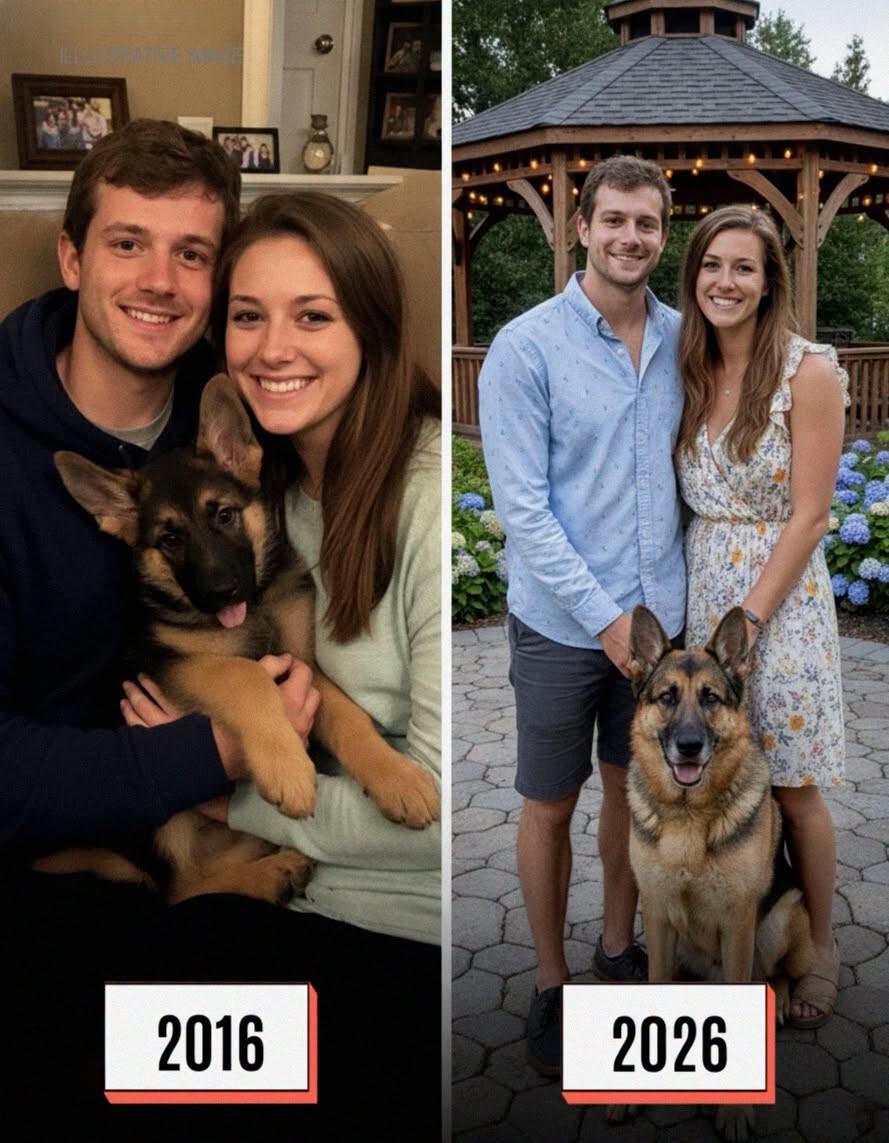
After ten years together, I thought I had earned the right to ask one simple question: Was he ever going to marry me?
David and I had built what looked like a married life. We owned a house together, shared a bank account, paid the bills together, and even had a dog who had slowly become part of both our lives. Our friends often called him my husband, and he never bothered correcting them.
For years, I had tried not to pressure him about marriage. I didn’t dream of a huge wedding or an expensive ceremony. I would have been perfectly happy with something small, surrounded by the people we loved.
So, when David made reservations at a nice restaurant for our tenth anniversary, I secretly wondered if this might finally be the night he would surprise me.
Dinner started beautifully. We talked, laughed, shared dessert, and enjoyed a bottle of wine we normally would have considered too expensive.
Eventually, I decided to ask.
“I don’t need a big wedding,” I told him. “I don’t need a ballroom or hundreds of guests. I just want us to make things official.”
His expression immediately changed.
He leaned back and gave a cold laugh.
“I’m never marrying you, Sarah.”
I was stunned.
When I asked why, he gave me the same explanation he had used for years.
“Marriage is just a piece of paper. It doesn’t change anything.”
But this time, something about the way he said it hurt more than ever. It wasn’t simply that he didn’t want to get married. It was the complete lack of respect for something that mattered deeply to me.
I nodded quietly.
“Okay.”
That was all I said.
David seemed relieved. He apparently believed the conversation was over.
But that night, after he went to bed, I sat alone at the kitchen table and started looking through our shared finances and documents. If our relationship was really ending, I needed to understand exactly what I would have to do next.
Then I remembered something his mother, Elaine, had told me years earlier.
During Christmas, she had pulled me aside and said she hoped that one day I would give David the chance to make our relationship official. She had spoken as if David desperately wanted to marry me.
At the time, I had simply assumed she was being sentimental.
Now, I wasn’t so sure.
I called her.
When she answered, I told her exactly what David had said at dinner.
There was a long silence.
Then Elaine said something that made my heart stop.
“Sarah, David told us that you were the one who didn’t want to get married.”
I thought I had misunderstood her.
“What?”
She explained that David had spent years telling his family that marriage made me uncomfortable. According to him, he was patiently waiting for me to become ready.
But that wasn’t the worst part.
Elaine revealed that three years earlier, David had asked her for his grandmother’s engagement ring. He had told her that he planned to propose during a trip we were taking to Maine.
Elaine had been thrilled.
She had even had the ring cleaned and appraised before giving it to him.
But no proposal ever happened.
According to David, I had supposedly panicked and asked him to wait.
I couldn’t believe it.
I had never done that.
Suddenly, several strange comments from his family over the years made sense. His sister had once told me how lucky I was that David was “so patient.” I had laughed at the time because I had no idea what she meant.
David had created an entirely different version of our relationship.
With our friends, he acted like marriage was unnecessary and that we were already more committed than married couples.
With his family, he portrayed himself as the devoted man patiently waiting for his nervous girlfriend.
In both stories, David looked like the good guy.
And I was the problem.
Elaine was furious.
She came to our house before sunrise and confronted him.
When David walked into the kitchen and saw his mother sitting there, he immediately knew something was wrong.
“Why did you tell everyone Sarah was the one who didn’t want to get married?” Elaine asked.
David tried to avoid the question.
Then she asked about the ring.
After a long moment, he disappeared upstairs and returned with a small black jewelry box.
Inside was the ring.
Untouched.
He hadn’t lost it.
He hadn’t sold it.
He had kept it hidden for three years while allowing everyone to believe that I had rejected his proposal.
That was the moment I realized the relationship I thought I knew had been built around a lie.
I decided to leave.
I packed an overnight bag, clipped the leash onto our dog, and told David I was staying with my sister.
He couldn’t believe it.
“You’re leaving over this?”
“No,” I told him. “I’m leaving because you lied to me for years.”
I stayed away for several days.
David called repeatedly, but I didn’t answer.
Then, almost a week later, he appeared outside my sister’s house.
He had the ring with him.
He got down on one knee and finally said the words I had once dreamed of hearing.
“Sarah, marry me.”
But something had changed inside me.
Years earlier, that moment might have made me cry with happiness.
Now, it only made me sad.
“This isn’t a proposal,” I told him. “It’s damage control.”
David admitted that he had been selfish. He said he liked our life the way it was and had kept avoiding the conversation because it was easier than giving me an honest answer.
I told him there was only one thing he could do.
Tell everyone the truth.
Not because he wanted me back, but because they deserved to know what had really happened.
Over the following months, David finally admitted to his family and friends that I had never rejected his proposal.
He had never actually proposed.
He had created the story himself because it was easier to make me responsible for his decision.
But I still didn’t go back.
I rented a small apartment, separated our finances, changed my passwords, and began building a life of my own.
Eventually, Elaine contacted me.
She had David’s grandmother’s ring.
David had returned it to her permanently.
She offered it to me.
At first, I refused.
The ring had once represented a promise that never happened. I didn’t want to carry that memory with me.
But eventually, I took it to a jeweler and had the stones transformed into a simple pendant.
It wasn’t a wedding ring anymore.
It wasn’t a symbol of David.
It was something I had chosen for myself.
For ten years, I had waited for someone else to choose me.
In the end, the most important decision wasn’t whether David would marry me.
It was whether I was willing to choose myself.
And for the first time in a decade, I was.