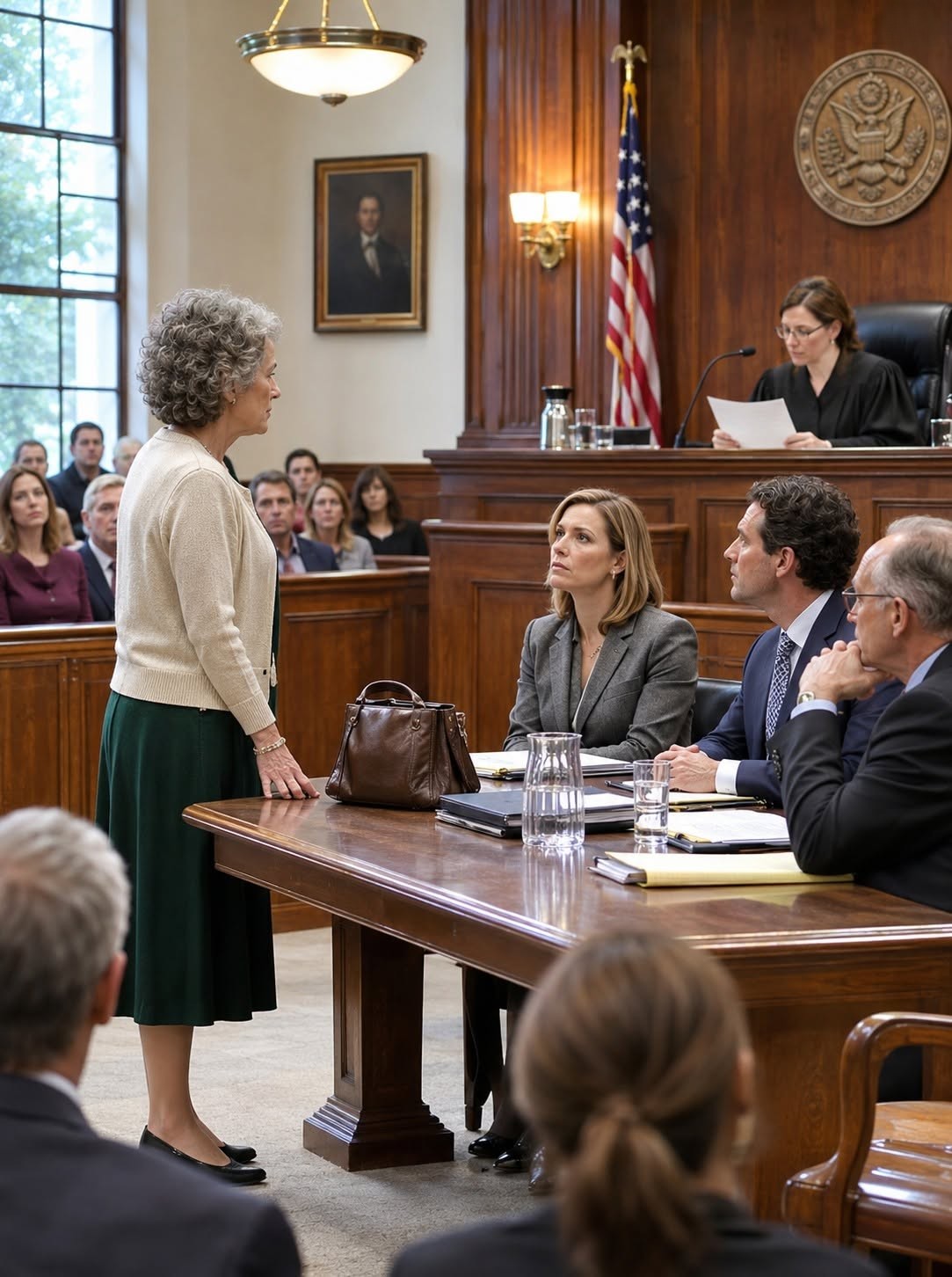
The quiet laughter began as Dorothy Hamilton entered the courtroom, carrying an old brown handbag and wearing sensible shoes. Across the room, her daughter Patricia and son-in-law Michael exchanged amused looks beside their expensive attorney. They believed Dorothy was an elderly widow who had no idea how to manage the fortune her late husband had left behind. Robert Hamilton had died six months earlier, leaving his wife an estate valued at approximately $62 million, while Patricia received only a family photograph and his wristwatch. Now Patricia wanted the will challenged and her mother declared incapable of managing her own affairs. Dorothy sat alone, placed a yellow legal pad on the table, and waited for the judge to arrive.
When Judge Margaret Walsh entered, she stopped briefly after recognizing the woman sitting at the defense table. Patricia noticed nothing. Her attorney, James Morrison, began describing Dorothy as confused, vulnerable, and financially inexperienced, asking the court to appoint Michael as conservator of the estate. But Dorothy calmly challenged the accusations, pointing out that Robert’s will had been properly witnessed, notarized, and reviewed before his illness. She also questioned why the petition contained no medical evidence proving she lacked the ability to make financial decisions. Morrison appeared uncomfortable, but he still believed he had an easy case. Then Dorothy reached into her handbag and handed the court a small card that changed the entire atmosphere of the hearing.
The card identified Dorothy Mitchell Hamilton as a licensed Massachusetts attorney who had remained in good standing since 1982. She had graduated from Harvard Law School and once handled complex financial fraud cases before choosing to devote her time to raising Patricia. Judge Walsh, who had attended law school with her more than forty years earlier, understood immediately why Dorothy had remained so calm. Dorothy explained that she had continued following legal developments and had carefully prepared her defense. She challenged the unsupported allegations, questioned the missing medical certificate, and presented records showing that Patricia and Michael had received more than $214,600 in financial assistance over the years without repaying it. She also produced a recorded voicemail in which Michael discussed making himself conservator so the couple could gain control of the fortune. The judge reviewed the evidence and denied the petition, finding no proof of forgery, undue influence, or mental incapacity. She also scheduled a separate hearing to consider whether Patricia and Michael should reimburse Dorothy’s legal expenses.
The courtroom victory did not immediately repair the family relationship. Patricia eventually apologized, but Dorothy made it clear that rebuilding trust would take time and honesty. Michael’s financial plans began unraveling, and Patricia later moved into a smaller home and filed for divorce. Dorothy sold the family house, purchased a cottage near the ocean, and worked with her estate attorney to organize a new financial plan. She then made an unexpected decision: she donated $31 million to legal aid organizations helping older adults facing financial exploitation and unfair conservatorship attempts. She now volunteers with those organizations, helping people understand their rights and prepare for difficult hearings. Patricia gradually began calling every Sunday, asking about her mother’s life before marriage and the legal career she had never known about. Their relationship is still being rebuilt, one conversation at a time. Dorothy also quietly deposits Patricia’s monthly repayments into a college savings account for her granddaughter. She has learned that protecting an inheritance is important, but protecting her independence, dignity, and future may be worth even more.