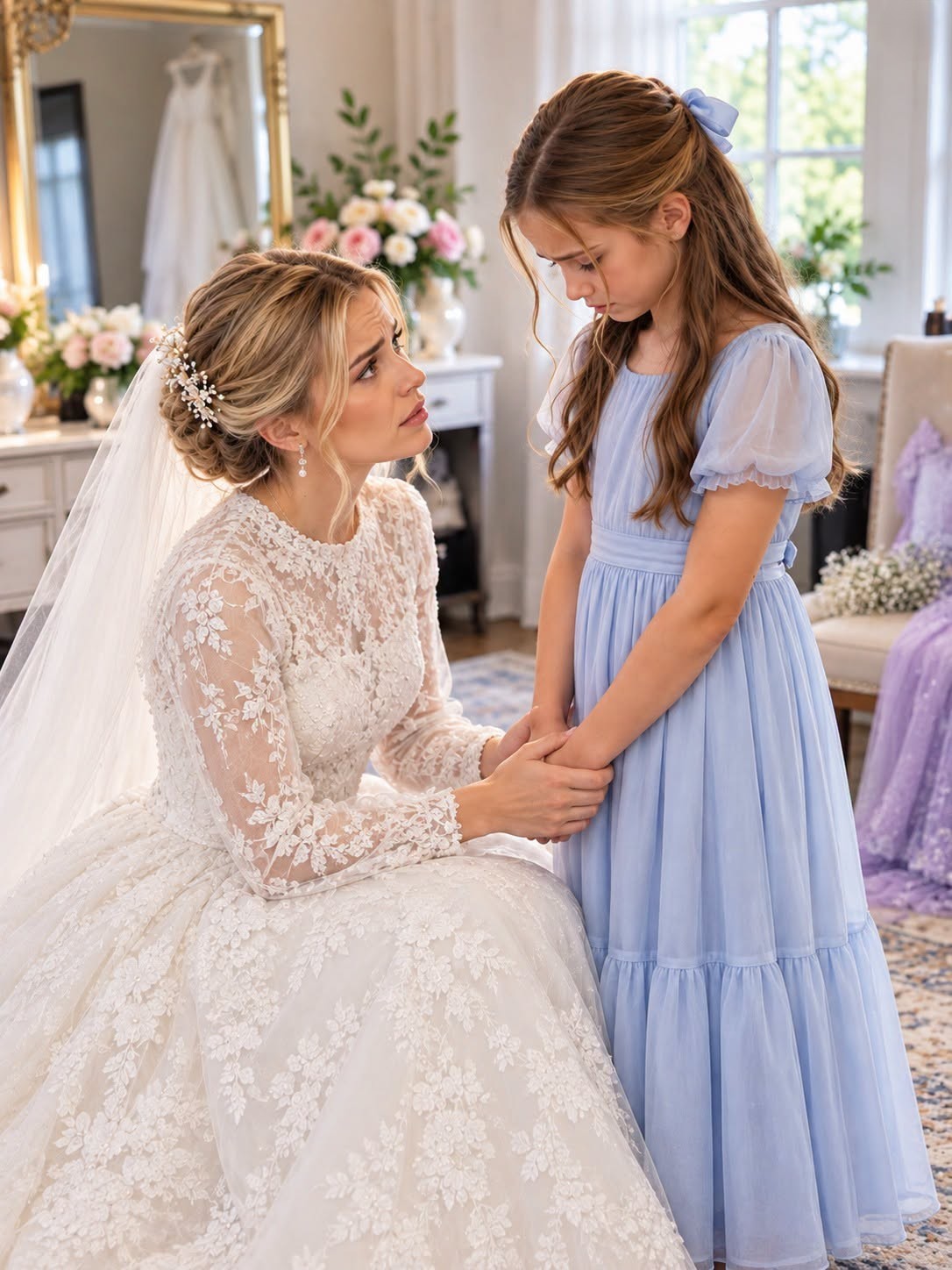
An hour before walking down the aisle, I found my eleven-year-old daughter, June, sitting quietly beside the lavender dress we had chosen together, wearing an ordinary blue sundress instead. When I asked why she had changed, she lowered her eyes and whispered, “It’s alright, Mom. You deserve a happy family.” Her words immediately worried me because she had spent six months practicing how to walk beside me during the ceremony. I was 38, and after three years with my fiancé, Colin, I believed we were about to build a loving future together. June had been excited about the wedding, helping choose flowers and even practicing her steps in our hallway. Now, she seemed determined to disappear from a day she had once anticipated with joy, and I soon learned that someone had convinced her she might be standing in the way of my happiness.
When June finally explained that Colin had suggested she stay out of the ceremony, I felt my stomach tighten. He had allegedly told her that his family might feel uncomfortable seeing a child from my previous marriage escort me and that weddings should focus on the bride and groom. He had also encouraged her to keep the conversation secret because he supposedly wanted to spare me additional stress. My concerns deepened when the wedding coordinator showed me Colin’s revised schedule, which removed June from the processional, placed her at a children’s table during the reception, and erased the photographs I had planned with her. When I confronted Colin, he admitted that he wanted the ceremony to focus on our future as husband and wife. Then he revealed that he believed we needed to stop organizing our lives around June and suggested she might spend more weekends with her biological father after the wedding. But the most painful discovery came when I realized he had been discussing changes to my daughter’s life without ever consulting me.
I could have ignored the warning signs, gone through with the ceremony, and hoped marriage would somehow resolve our differences. Instead, I considered what trust, family responsibility, and a shared future would actually require. Colin had made decisions involving my daughter while allowing me to believe we agreed on how our family would work. His relatives had not demanded June’s exclusion; his sister later revealed that their mother had even purchased a silver bracelet to welcome her. Colin had used his family’s supposed objections to justify his own choices. With seventy-five guests waiting in the chapel, I stopped the music and announced that the wedding would not take place. I knew canceling would cost us money through nonrefundable deposits and create difficult conversations about shared expenses, but no attorney, court proceeding, insurance policy, or financial investment could address the deeper problem: I could not build a marriage on dishonesty about my child’s place in our lives. When Colin tried to dismiss June’s feelings as a misunderstanding, my decision became final.
In the weeks that followed, June and I worked through the disappointment together, and I arranged for her to speak with a child counselor so she could process what had happened without feeling responsible for the outcome. I also learned to pay closer attention when she seemed worried or hesitant, rather than assuming she would always tell me everything. One Saturday, she put on her lavender dress simply because she still loved it, and we took a playful photograph in the backyard. We framed it and placed it beside pictures of her father and other important family memories. I still felt sadness about the future I had imagined with Colin, but I no longer confused keeping a relationship with protecting my daughter. June had never needed to earn her place beside me, and she should never have been asked to surrender it. The wedding never happened, but something more important remained: the promise that my daughter would always belong in the family we already had.