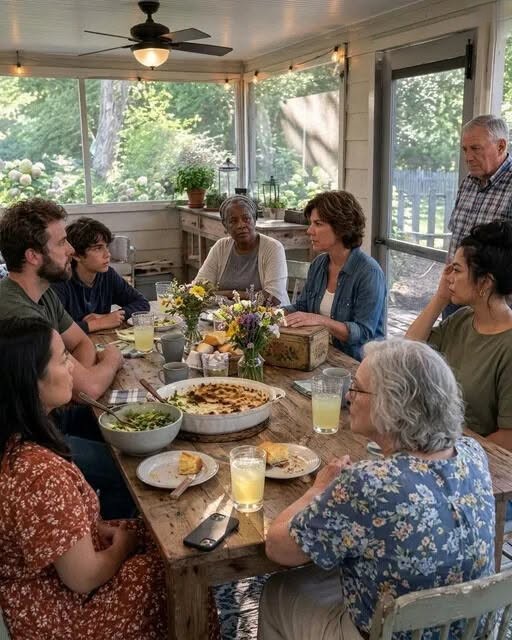
“There’s no room for her at the reunion,” my mother said about my husband Michael’s 8-year-old daughter, Sophie. Then my sister Lauren added, almost casually, “She isn’t really family.” Sophie was standing only a few feet away, and I watched her tiny hands freeze over the cracker tower she had been building. I didn’t yell or argue. Instead, I reached into my purse, removed the house keys my parents had always said symbolized family and trust, and placed them on the table. “If Sophie isn’t family,” I said, “then neither am I.” Michael quietly told Sophie to get her coat, and we walked out while nobody apologized or asked her to stay.
That evening, Sophie asked the question that broke me: “Grandma doesn’t want me there because I’m not really yours?” I told her she had done absolutely nothing wrong and that she was my family, no matter what anyone around a dinner table decided. The reunion incident also forced me to admit this wasn’t new. My mother had forgotten Sophie’s personalized Thanksgiving gift, left her out of cousin photographs, and even misspelled her name at Christmas. Meanwhile, I was still checking Dad’s blood pressure, organizing medications, running errands, cleaning their house, and sending my parents $300 every month. I had spent years acting like family whenever they needed me—but they had finally shown me exactly where they believed Sophie belonged.
That night, I canceled the automatic $300 payment, withdrew only the unused portion of my own reunion contribution, and told my parents they would need to arrange their own medical help and errands. I wasn’t interested in an attorney, court battle, insurance dispute, mortgage fight, investment argument, or anything involving their estate; I simply stopped providing money and unpaid care to people who rejected the child I was raising. A month later, the reunion happened without us. Then Mom crossed an even darker line. She sent me a photograph that appeared to show Michael kissing a blonde woman. Instead of panicking, I showed Michael. He found the original photo from our anniversary—the same restaurant, jacket, watch, lights, and pose—but in the real picture, he was kissing me. Someone had digitally replaced me with another woman. When I confronted Mom with both images, she admitted the picture might be fake and coldly said Michael and Sophie still weren’t “blood.”
That ended everything. I posted both photographs in the family group chat and explained why I was cutting contact with Mom, Dad, Lauren, and Kevin. Some relatives apologized; others admitted they had noticed Sophie being treated differently for years. A full year later, my family circle is smaller, but our home feels safer. Sophie gradually stopped wondering whether she belonged at holidays or where she would be allowed to sit. Then one Saturday, after scraping her knee on her scooter, she ran through the kitchen calling, “Mom! I need a Band-Aid!” She froze when she realized what she had called me, then hugged me and deliberately said it again: “Mom.” We have since talked carefully about adoption while continuing to honor the mother she lost. I don’t feel like I defeated anyone. I simply stopped allowing blood relatives to decide who counted as my family—and chose the people who chose Sophie and me back.