Her father’s call reached her as she was locking her office, winter coat half on, keys in hand—the kind of moment when letting a call go to voicemail would have been easy. Instead, she heard him tell her not to come home for Christmas, without greeting, explanation, or softness. The reason followed quickly: Jason, her stepbrother, would be there with new in-laws, neighbors, and friends, and her father did not want anyone asking about her Army service, her deployments, or her work. He did not want Jason overshadowed. In that hallway, eighteen years in uniform and a hard-earned rank shrank under the weight of an old tone that made her feel eighteen again. Memories surfaced: standing in the driveway with a duffel bag on the day she left for basic training, while her father shook Jason’s hand over some forgotten achievement. Over time, Jason had become the son her father seemed to have always wanted, while she became the daughter assumed to be fine. Families, she realized, do not always push you out with a fight; sometimes they simply stop setting your place at the table. She did not argue, did not mention the plane ticket or the rearranged duty schedule. She canceled the flight with two clicks and let a piece of herself disappear with the confirmation email, then quietly volunteered for the overnight Christmas Eve shift, freeing two junior soldiers to be home with their children as a blizzard warning grew into a statewide emergency.
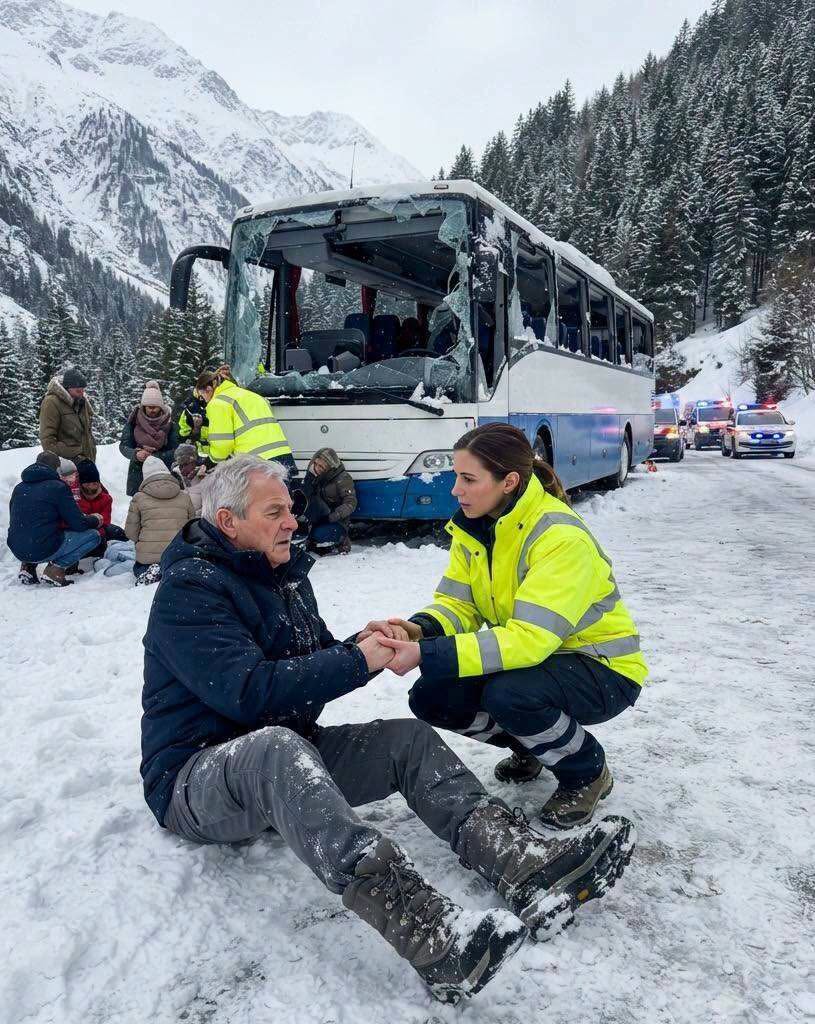
By that night, her unit was activated to support state and county responders along the interstate, where visibility collapsed and vehicles slid into ditches faster than help could reach them. At mile marker 214, in wind that rocked their heavy response vehicle, radio traffic jumped from routine to urgent: a charter bus with nearly forty passengers had rolled down an embankment, a pickup had jackknifed behind it, children were aboard, and a fuel tanker sat precariously above the scene with its driver missing. Her team arrived first. She slipped into command as she had in countless operations—coordinating with State Patrol, locking down the highway, forming triage teams, and requesting a medical helicopter despite impossible flight conditions. The overturned bus, wheels still turning and interior lights flickering, became the immediate priority. Climbing its exposed flank through stinging snow and ice, she forced open an emergency exit and looked down into a tangle of broken glass, luggage, and terrified faces. Identifying herself as United States Army, she promised every passenger would be taken out, children first. A human chain formed through the storm, passing small, shaking bodies from her hands to troopers and soldiers below. One boy clung to her sleeve, asking if he would really see his mother; she gave him seconds of reassurance before turning back to the next person, understanding that on a night like that, the work itself was the humanity. Nearly an hour later, every passenger had emerged alive.