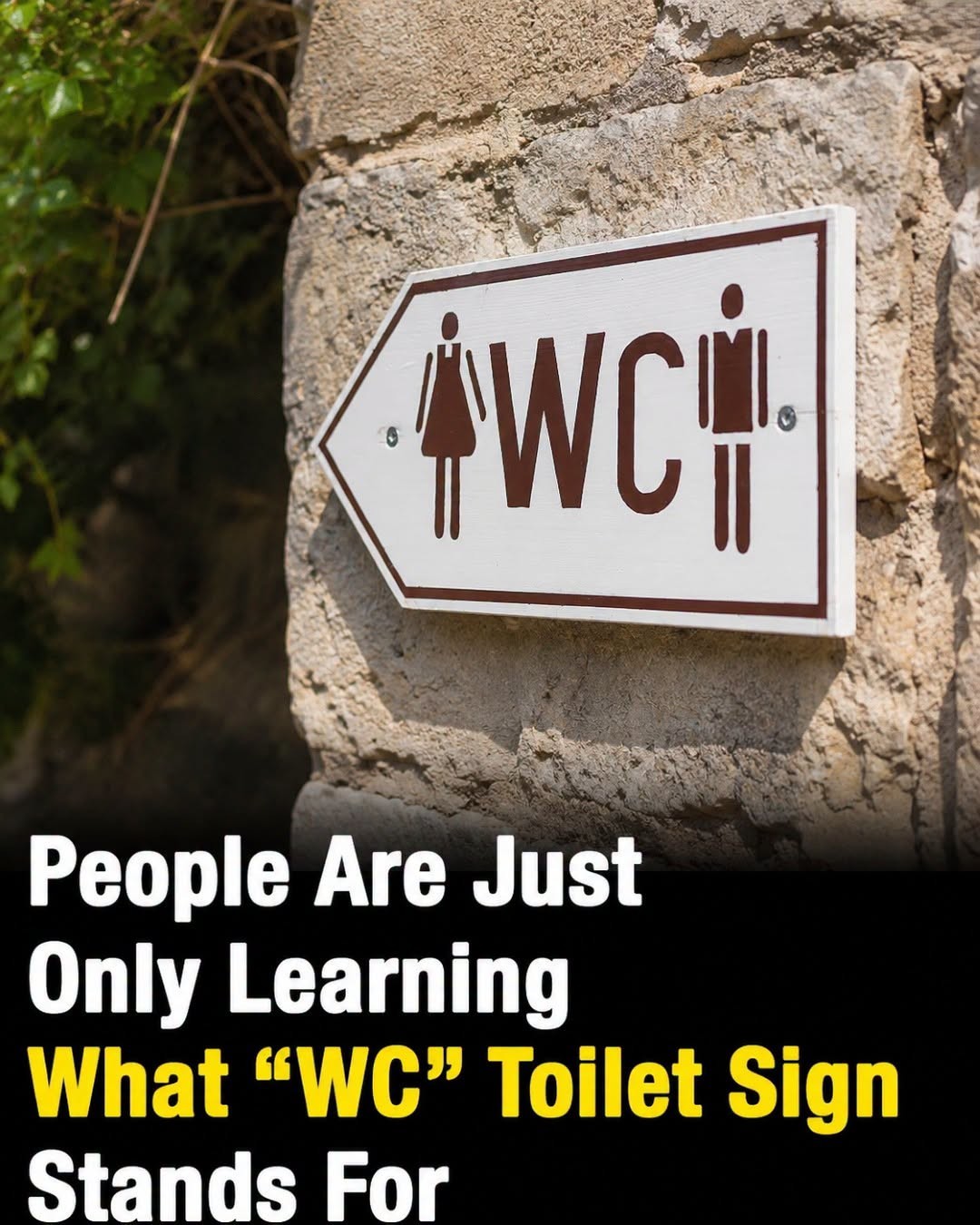
Have you ever spotted the letters “WC” outside a public restroom and paused for a moment, wondering what they actually mean? You’re certainly not the only one. Travelers often encounter the abbreviation in airports, hotels, restaurants, and train stations around the world, yet many people are surprised to learn what it stands for. While terms like bathroom, restroom, washroom, and toilet are familiar in different regions, “WC” remains one of the most widely recognized labels for a place where people can freshen up and take care of basic needs. The mystery surrounding those two simple letters has sparked countless online discussions, with many people admitting they used the sign for years without ever knowing its origin.
Part of the confusion comes from the fact that many names for these spaces don’t seem completely logical. A viral TikTok video from 2020 highlighted this perfectly when a couple joked about the differences between American and Canadian terminology. One questioned why Canadians call it a “washroom,” while another pointed out that people rarely “rest” in a “restroom.” Their lighthearted conversation quickly resonated with viewers, who filled the comments with their own favorite terms. Some mentioned “bathroom,” others preferred “toilet,” while international viewers introduced words like “loo,” “lavatory,” and, of course, “WC.” The discussion revealed how language evolves differently across cultures, even when everyone is referring to the same everyday place.
The letters “WC” stand for “water closet,” a term that dates back to the early days of indoor plumbing. According to dictionary definitions, a water closet originally referred to a room or compartment containing a toilet. Historically, bathrooms were designed primarily for bathing, while toilets were often located in separate spaces. During the late 19th century, indoor plumbing became more common, and homes began incorporating dedicated toilet rooms known as water closets. Over time, these spaces evolved, and modern bathrooms combined bathing facilities and toilets into a single room. Even so, the term “water closet” survived and remains in use today, especially on signs intended for international visitors who may speak different languages.
Interestingly, people around the world continue to use a wide variety of names for the same facility. Online discussions frequently compare terms such as restroom, washroom, bathroom, loo, and WC, with each region having its own preference. Canadians are particularly known for using “washroom,” while Americans often alternate between “bathroom” and “restroom.” Other languages have their own unique expressions as well, some of which sound just as unusual when translated literally. Despite the differences, the purpose remains exactly the same. So the next time you see a sign marked “WC,” you’ll know that it’s simply another name for a restroom—one with a surprisingly long history that dates back to the early days of modern plumbing.